زبان یہاں تبدیل کریں ↓
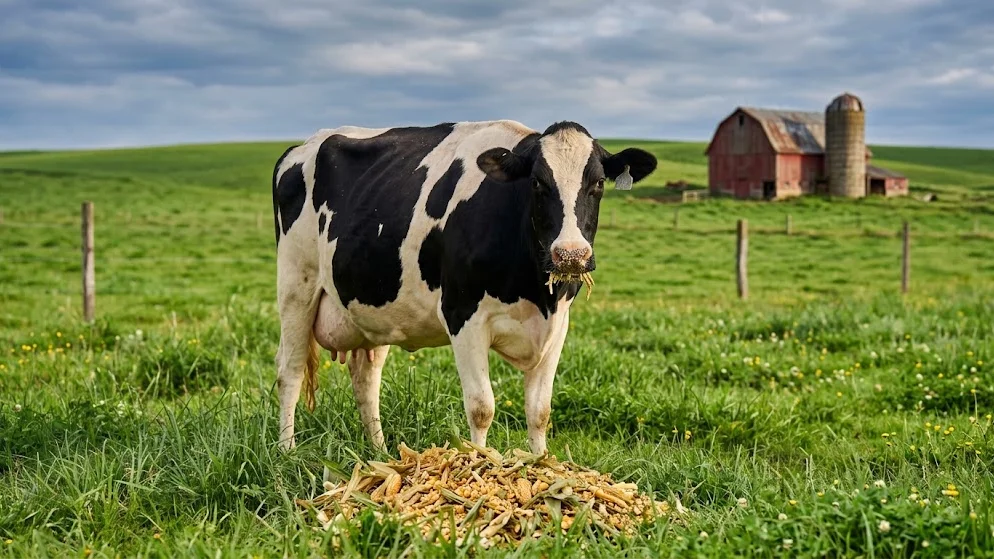
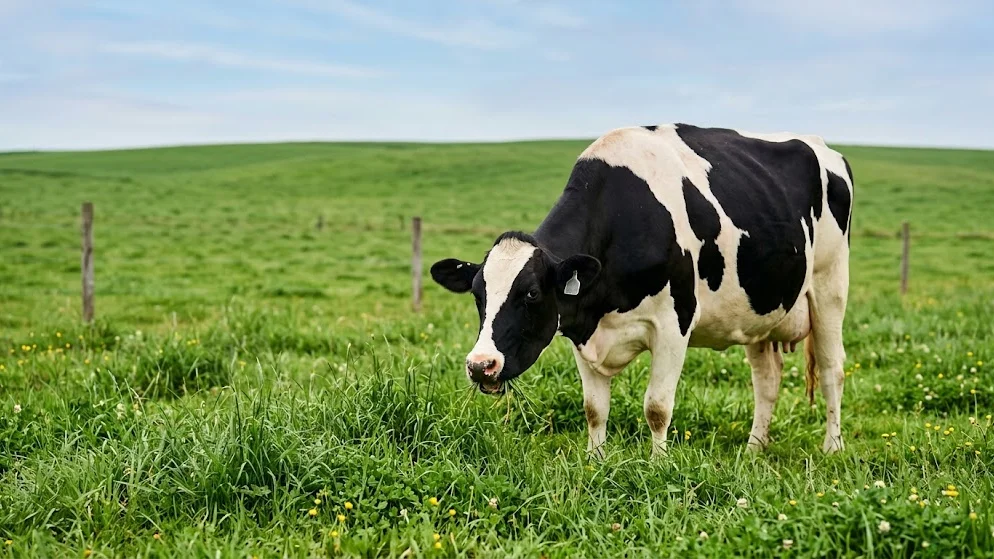
A Holstein Friesian cow is built to produce a large volume of milk, and that is exactly why her feeding is more demanding than that of a typical local or crossbred animal.
A high-yielding Holstein can produce 25 to 40 litres a day or more, depending on her genetics, stage of lactation and management.
To do this she must eat a large amount of dry matter every day, get enough energy and protein to support milk production, and keep her rumen working normally. Feeding a Holstein is largely about balancing those three things.
The basic idea: forage first, concentrate second
Cows are ruminants. Their rumen is designed to digest fibre from plants, and it works properly only when it receives enough fibrous feed. A Holstein’s ration is therefore built in two layers:
- Forage (green fodder, silage, hay, straw) forms the base of the ration. It supplies fibre, which keeps the rumen healthy, stimulates chewing and saliva production, and helps maintain the fat content of milk.
- Concentrate feed (grain, oilseed cakes, by-products, commonly sold in Pakistan as wanda) provides the extra energy and protein that forage alone cannot deliver to a high-yielding cow.
A cow giving 30 litres of milk cannot get enough energy from berseem or straw alone. She would need to eat more than her stomach can hold.
This is why concentrates are necessary for high yield. But too much concentrate and too little fibre leads to acidosis, poor fat percentage in milk, lameness and lower feed efficiency. Most feeding problems in commercial dairies come from getting this balance wrong.
Forages commonly used in Punjab
Green fodder
- Berseem (Egyptian clover) is the main winter fodder in Punjab, available roughly from November to April. It is high in protein and highly palatable. Because it is so rich in protein and can be very lush, it is normally fed together with a drier fibre source such as wheat straw rather than as the only forage. Feeding large quantities of fresh, wet berseem alone can cause bloat, so it should be introduced and managed carefully.
- Lucerne / alfalfa is a high-quality perennial legume, rich in protein, calcium and digestible fibre. It is one of the best forages for dairy cattle and is grown in parts of Punjab, but it needs good irrigation and management.
- Maize (green fodder) is widely grown in summer. It is energy-rich and cows eat it well, but its protein content is lower than legumes, so it usually needs a protein source alongside it.
- Sorghum and sudan grass are common summer fodders. The important caution is with young sorghum: very immature or drought- or frost-stressed sorghum can contain prussic acid (hydrocyanic acid), which is toxic. Cutting at the correct stage and following local agronomic advice matters.
- Oats and Persian clover (shaftal) are also used as winter fodders in some areas.
Silage
Silage is fodder that has been chopped, packed tightly and fermented without air so it can be stored for months.
- Maize silage is the most important silage for commercial Holstein herds. It is high in energy, palatable, and provides a consistent feed through the months when green fodder is scarce. In Punjab, the gaps in fodder supply, especially the summer dearth period before monsoon fodder is ready and the lean period in late autumn, are one of the main reasons commercial farms make silage. Its quality depends heavily on harvesting at the right stage, chopping length, packing and sealing. Badly made silage can cause spoilage and animal health problems.
- Silage made from sorghum or other crops is also used, though nutritional value varies.
Hay and straw
- Lucerne hay and other good legume hay give protein and digestible fibre.
- Wheat straw is low in nutrients and digestibility. It is not fed for nutrition but for fibre. In rations dominated by berseem or silage, a controlled amount of straw helps keep the rumen stable. It should not be a major share of the diet for a high-yielding cow.
Concentrate feed (wanda)
Concentrate feed supplies what forage cannot: concentrated energy and protein. Ingredients commonly used in Pakistan include:
- Energy sources: maize grain, wheat or wheat by-products (bran/choker), rice polish, molasses in limited amounts
- Protein sources: cottonseed cake, canola meal, soybean meal, sunflower meal, maize gluten meal, guar meal
- Fat sources: whole cottonseed (banola) and protected/bypass fat products are used by some farms to raise energy density, especially for early lactation and hot months
- Minerals and vitamins added to the mix
Two practical points matter here:
- Ingredients and their cost change through the year, so good commercial rations are adjusted according to feed prices, quality and the nutrient analysis of the forage on hand.
- Ready-made concentrate is not identical between brands. Protein percentage, energy value, the source of protein, and quality control vary. A label or bag is not a guarantee of suitability for every production stage.
Minerals, salt and vitamins
High-yielding cows lose large amounts of calcium, phosphorus, magnesium and other minerals in milk, and forage alone is often not enough. A commercial mineral mixture formulated for dairy cattle is normally part of the ration.
- Calcium and phosphorus are needed for milk and bone. The ratio and total amounts matter, and needs change around calving.
- Salt (sodium chloride) is required daily. Sodium and chloride also matter for water intake and heat management.
- Magnesium, potassium, and trace minerals (zinc, copper, selenium, manganese, cobalt, iodine) support milk production, immunity and fertility. Requirements vary with the soil and feed of the region, and some are toxic if overdone.
- Vitamins A, D and E are commonly supplemented, particularly when cows have limited access to fresh green forage or sunlight.
Because excess is as harmful as deficiency for several minerals, using a product designed for dairy cattle and formulated by a nutritionist is safer than adding minerals by guesswork.
Water: the most overlooked feed
Milk is roughly 87% water. A lactating Holstein may need very roughly 100 litres or more of drinking water a day, especially during hot weather and at high yield.
Exact needs depend on milk yield, temperature and feed. Water must be clean, available at all times and easy to reach. Restricting water reduces feed intake and milk yield quickly.
Total Mixed Ration (TMR)
Many commercial Holstein farms feed a Total Mixed Ration (TMR): forage, silage, concentrate and minerals are chopped and mixed together so that every mouthful contains a balanced combination.
The reasons farms use TMR:
- Cows cannot pick out only the tasty concentrate and leave the fibre
- The rumen receives a more steady, uniform supply of nutrients, reducing the risk of acidosis
- Feeding can be adjusted by production group rather than treating all cows the same
TMR requires a mixer wagon, weighing equipment, and consistent management. It is not required for good results, and a well-run system that feeds forage and concentrate separately can also work, but the concentrate must then be split into several feedings, not given in one large meal.
Feeding changes with the stage of lactation
A Holstein’s needs are not constant.
- Dry period (about 60 days before calving): the cow is not producing milk, so she needs a lower-energy, higher-fibre ration. Overfeeding at this stage can lead to overly fat cows and metabolic problems after calving. Mineral balance, particularly calcium management, is important in the last weeks before calving.
- Transition period (roughly three weeks before to three weeks after calving): this is the most critical phase. Feed intake falls around calving while milk production rises rapidly, creating an energy deficit. Poor management here is linked to milk fever, ketosis, retained placenta, displaced abomasum and reduced milk yield for the rest of the lactation. Diets are specifically adjusted for this period.
- Early lactation (first 100 days): peak milk production. The cow needs a high-energy, high-protein ration, but intake rises more slowly than milk yield, so she often loses body condition. Rations must be dense in nutrients while still containing enough fibre.
- Mid and late lactation: yield falls, appetite remains high, and the ration can be adjusted to prevent excess weight gain.
Heifers and calves have their own feeding programme (colostrum, milk or milk replacer, calf starter, and later grower rations), which is a separate topic.
How much does a Holstein eat?
There is no single figure. A mature lactating Holstein commonly consumes around 3 to 4 percent of her body weight as dry matter per day, and high-yielding cows may sometimes eat more.
Because green fodder and silage contain a lot of water, the amount fed “as fed” is much higher than the dry matter amount.
Actual intake depends on body weight, milk yield, stage of lactation, ration quality, weather, and how comfortable and stress-free the cow is.
Rather than following a fixed “kilograms per cow” rule, farms should base rations on milk yield, body condition and feed analysis.
Feeding in Pakistan’s heat
Holsteins are originally from a cool climate and are sensitive to heat. When temperature and humidity are high, cows eat less, spend more energy staying cool and produce less milk.
Feeding-related adjustments used in hot conditions include:
- Making the ration more nutrient-dense so cows get enough nutrition from less feed
- Feeding more of the ration in the cooler parts of the day, such as early morning and evening
- Providing clean, cool water in adequate quantity and ensuring enough trough space
- Avoiding leftover feed sitting in the sun, since it spoils faster in heat
- Ensuring potassium, sodium and other electrolyte needs are met, since cows lose minerals with sweat and panting
- Using shade, fans and sprinklers alongside feeding measures, because nutrition alone cannot fix heat stress
Common feeding mistakes
- Giving too much concentrate and too little fibre, causing acidosis and low milk fat
- Feeding the same ration to all cows regardless of production and stage
- Sudden ration changes; rumen microbes need days to adjust to new feed
- Poor-quality or mouldy silage and hay, which can affect health and milk
- Ignoring mineral supplementation or giving minerals without knowing the ration
- Restricting water or providing dirty water
- Not measuring or testing forage. Nutrient content varies with crop stage, season and preservation, so rations based on assumptions can be wrong
Getting the ration right
Because breed genetics, milk yield, feed cost and forage quality differ from farm to farm, there is no universal ration.
Farms usually work with a qualified dairy nutritionist or veterinarian to formulate rations based on forage analysis, and adjust them as production changes.
Observing cows regularly also helps: body condition score, rumination, manure consistency, milk yield and milk fat are all signs of whether a ration is working.
In short, Holstein Friesian cows are fed a carefully balanced combination of fibre-rich forage, energy- and protein-rich concentrate, minerals, vitamins and plenty of clean water. The exact mix changes with the season, the cow’s stage of lactation and the quality of the feed available.