زبان یہاں تبدیل کریں ↓
Holstein Friesian is the world’s most widely kept dairy breed, and it is also the breed most commercial dairy farms in Pakistan are either running pure or crossing into their herds.
Understanding what this breed actually is — its body type, production potential, and its real requirements — helps in making sound decisions about feeding, housing, and herd management, especially under Punjab’s climate.
Origin and Global Standing
The breed originated in the Dutch provinces of North Holland and Friesland, where farmers selected cattle over centuries for high milk volume on grass-based systems.
From there it spread worldwide and became the standard breed for large-scale milk production because no other dairy breed matches its sheer output per animal.
In North America the same animal is usually just called “Holstein”; in Europe and South Asia the name “Holstein Friesian” (HF) is more common.
Physical Characteristics
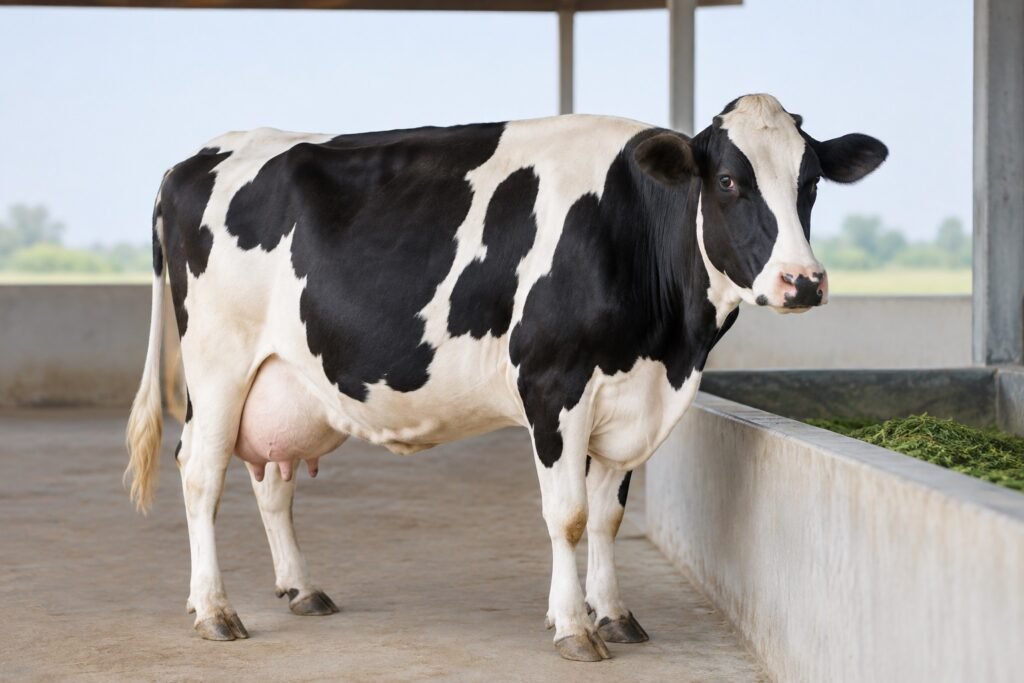
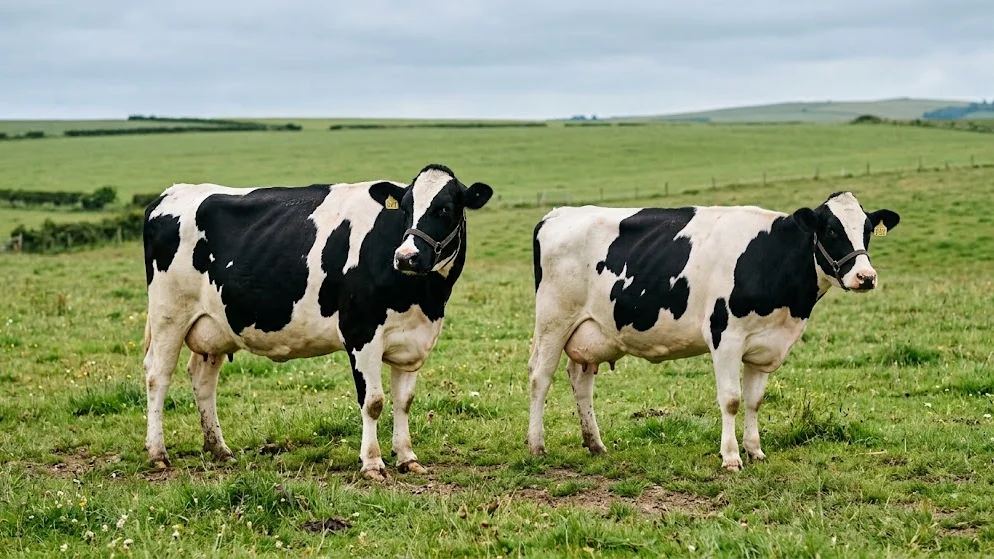
HF cattle are easy to identify by their black-and-white patched coat, though a red-and-white variety also exists due to a recessive gene and is fully accepted within the breed.
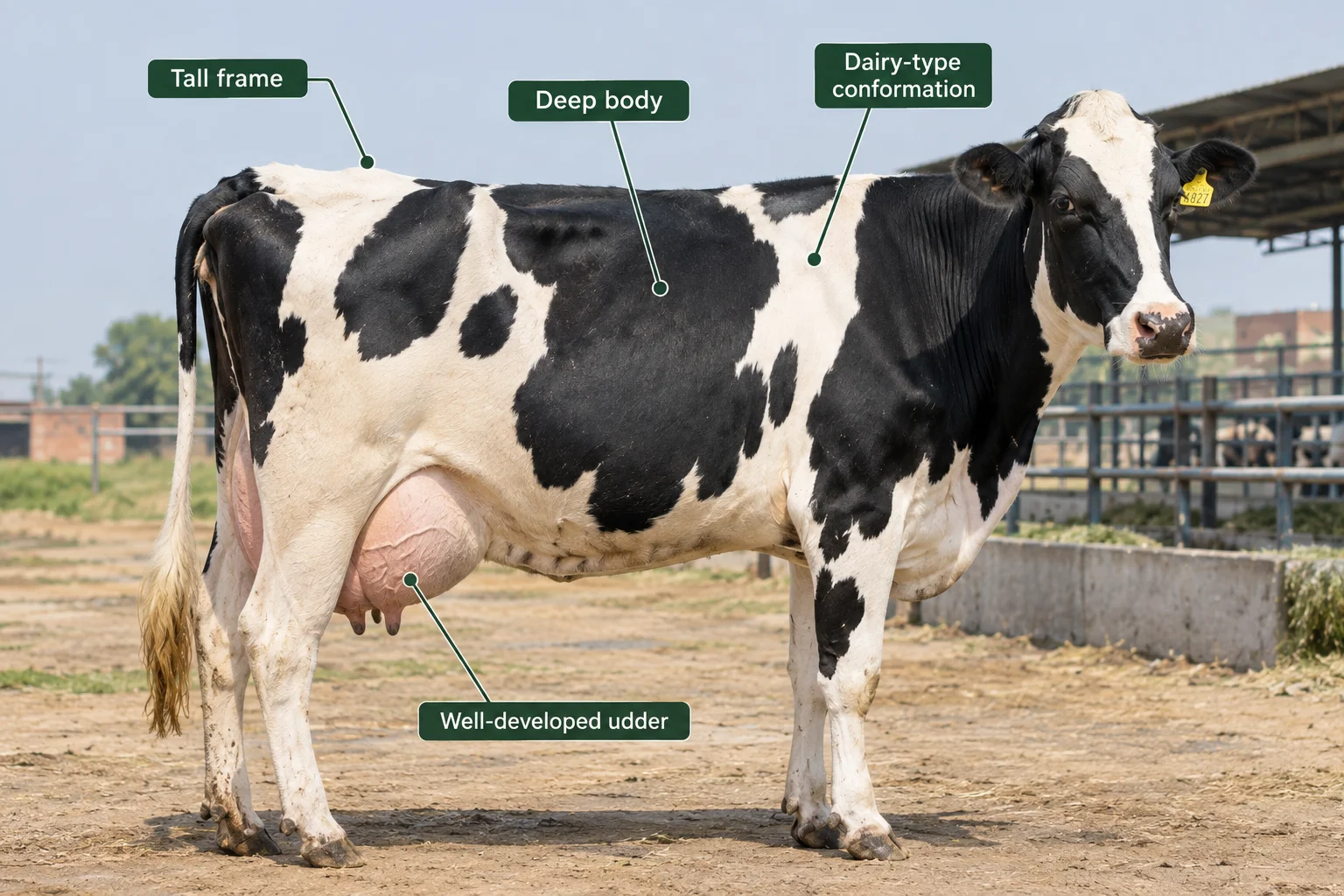
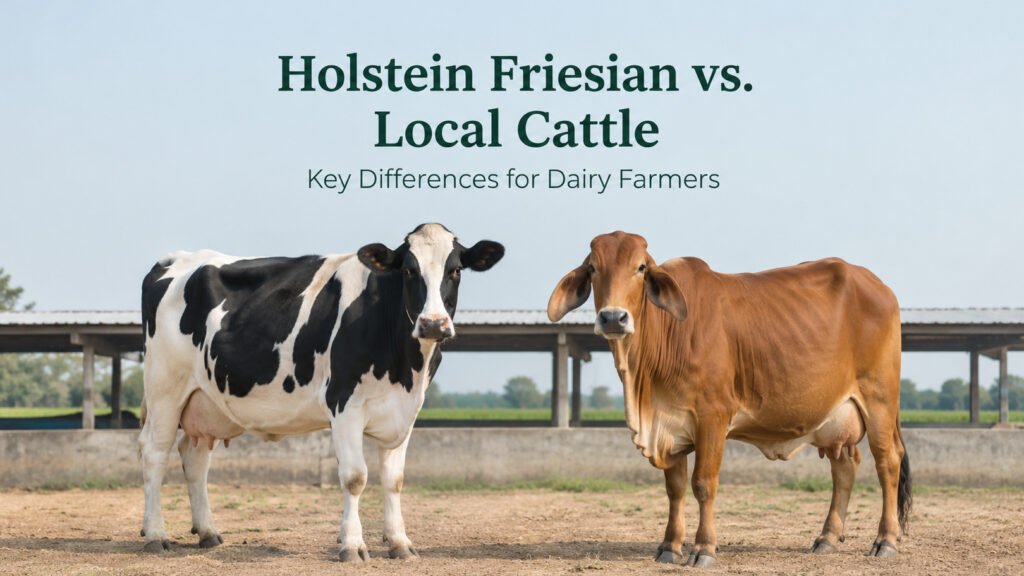
They are large-framed animals: a mature cow typically weighs somewhere between 580–650 kg, with mature bulls considerably heavier, often 900–1,100 kg. Height at the shoulder for a mature cow is usually around 145–150 cm, noticeably taller than Sahiwal, Cholistani, or other Bos indicus cattle common in Pakistan.
This large frame is directly tied to the breed’s high feed intake capacity — a bigger rumen and body mass allow the cow to consume and process more feed, which supports higher milk output, but it also means her daily nutrient requirement is proportionally higher.
Milk Production Potential
HF is kept specifically for milk volume, not for milk richness.
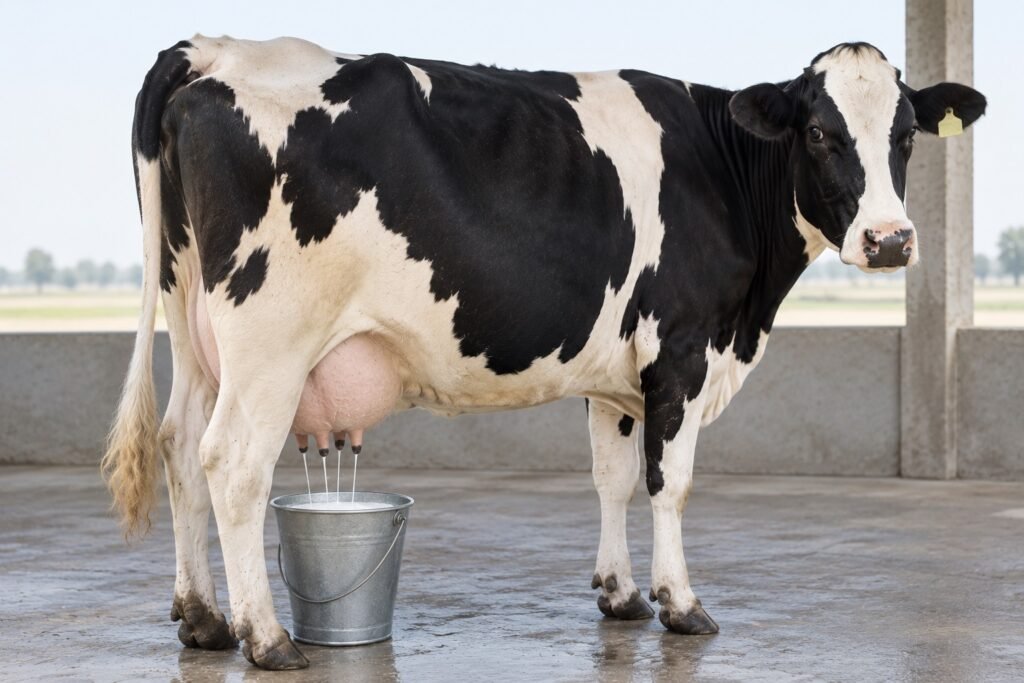
Under good management with balanced feeding and comfortable housing, a mature Holstein Friesian cow can produce well above what most indigenous or crossbred cows give — figures commonly cited in well-managed systems range from roughly 25 to 35+ liters per day at peak lactation, though actual output on any given farm depends heavily on genetics, parity (first-lactation heifers give noticeably less than cows in their third or fourth lactation), feeding quality, and how well heat stress is controlled.
In many commercial Pakistani setups, average daily yields tend to sit lower than the genetic potential of the breed simply because summer heat, forage shortages in certain months, and management gaps pull output down — this is a management and climate limitation, not a fault of the animal.
Milk Composition
This is where HF differs sharply from what Pakistani consumers are used to.
Holstein milk generally runs around 3.5–3.7% fat and 3.0–3.2% protein, which is noticeably leaner than Sahiwal cow milk and far leaner than Nili-Ravi buffalo milk, which commonly reaches 6–7% fat.
Since milk in Pakistan is frequently priced and judged on fat content, this is an important economic point for anyone comparing HF milk value to buffalo milk on a per-liter basis — HF’s advantage is volume, not richness.
Reproduction and Lactation Cycle
A standard lactation is calculated at around 305 days, followed by a dry period of roughly 60 days before the next calving, so that the cow’s udder tissue can rest and regenerate ahead of the next lactation.
The target calving interval — the gap between one calving and the next — is usually aimed at 12 to 13 months, but this is genuinely difficult to hit consistently in hot climates because heat stress reduces conception rates during summer breeding.
Heifers reach puberty around 9–12 months of age, but breeding age is decided by body weight, not just age — a heifer is typically bred once she reaches roughly 55–60% of expected mature body weight, which under good nutrition can happen by 13–15 months, targeting a first calving around 22–24 months.
On farms where growth is slower due to feed quality or heat-related stress, first calving often gets pushed later, which delays the return on rearing a heifer and is worth tracking closely.
Heat Tolerance and Climate Considerations in Punjab
This is the single biggest practical challenge of keeping Holstein Friesian in Pakistan. The breed developed in a cool, temperate climate, and its thermoneutral comfort zone is considerably lower than that of local zebu breeds.
Once temperature and humidity combine to push the heat-humidity index into stressful territory — which happens routinely across Punjab summers, especially May through August — HF cows show reduced feed intake, panting and increased respiration rate, lower milk yield, and reduced conception rates.
This isn’t a minor seasonal dip; heat stress is one of the main reasons pure Holstein performance in Pakistan often falls short of the breed’s documented genetic potential.
Practical mitigation depends on farm resources but generally follows established principles: providing continuous shade, improving shed ventilation (natural cross-ventilation or fans), using sprinklers or misting combined with fans over feeding and resting areas, ensuring constant access to cool, clean drinking water, and shifting feeding times to cooler parts of the day.
Because of this heat sensitivity, many Pakistani commercial herds don’t run pure Holstein exclusively — crossbreeding HF with heat-tolerant local breeds like Sahiwal is a common strategy to combine better milk volume with improved heat and disease tolerance, though this comes with its own trade-offs in milk yield compared to pure HF genetics.
Feeding Requirements
A high-yielding HF cow has a correspondingly high nutrient demand, and feeding cannot be treated the same as for a local breed.
The forage base on most Punjab farms typically includes berseem in winter (a high-protein legume fodder that is a mainstay during the rabi season), lucerne/alfalfa where available as a cut-and-carry legume forage, maize or sorghum silage to bridge green fodder shortages especially in summer, and wheat straw (tuti) as a lower-quality roughage that needs to be balanced with better-quality feeds rather than fed alone.
On top of forage, a concentrate mixture (wanda) — usually built around cottonseed cake, wheat bran, maize, mustard/canola cake, and a mineral mixture — is essential to meet the energy and protein density a lactating HF cow needs, since forage alone generally cannot supply enough energy for high milk output.
Many larger commercial operations are shifting toward Total Mixed Ration (TMR) feeding, where all forage, concentrate, and minerals are mixed into one uniform ration; this reduces selective feeding (where cows pick out grain and leave roughage, which can cause rumen acidosis) and helps deliver more consistent nutrition.
Water intake is also far higher than people generally expect — a high-yielding HF cow can drink well over 100 liters a day depending on yield and ambient temperature, and restricted water access will show up quickly as reduced milk output.
Housing and Management
Because of their size and production level, HF cows need adequate space, dry and non-slip flooring to reduce lameness, and clean, well-ventilated housing.
Wet or poorly drained flooring is a common contributor to hoof problems in high-producing cows, since a heavier animal standing for long periods on hard or wet surfaces is more prone to lameness than a smaller, lighter-framed local breed.
Common Health Concerns
High-producing dairy cattle are generally more prone to a specific set of health issues than low-yielding local breeds, mainly because of the physiological demand of producing large milk volumes:
- Mastitis (udder inflammation) is the most common issue in high-yielding dairy cows, usually linked to milking hygiene, udder cleanliness, and milking technique. Warning signs include swelling, heat, or abnormal changes in milk (clots, watery consistency, discoloration). Prevention centers on clean milking practices, proper teat care, and prompt attention to any change in the udder.
- Metabolic disorders around calving — such as milk fever (low blood calcium) and ketosis (negative energy balance) — are more common in high-yielding cows because of the sudden nutrient demand at the start of lactation. These are managed primarily through careful transition-period feeding in the weeks before and after calving.
- Lameness, often linked to flooring, hoof care, and body condition.
- Reduced fertility during heat stress periods, as noted above.
None of these conditions should be self-diagnosed or self-treated with guesswork; they all call for veterinary assessment, since the underlying cause (nutritional, infectious, or management-related) determines the correct response, and delayed or incorrect handling can turn a manageable issue into a costly one.
Holstein Friesian in the Pakistani Context
Holstein Friesian remains the benchmark breed for milk volume anywhere in the world, and that includes Pakistan.
But its performance here is far more management-dependent than in temperate countries — heat mitigation, forage planning across seasons, and disciplined feeding and health protocols matter more for HF than for local breeds because the animal’s genetic potential is high, but its tolerance for gaps in management is low.
Farms that understand this trade-off — and plan feeding, housing, and heat management accordingly — are the ones that get closer to realizing what the breed is actually capable of.