زبان یہاں تبدیل کریں ↓
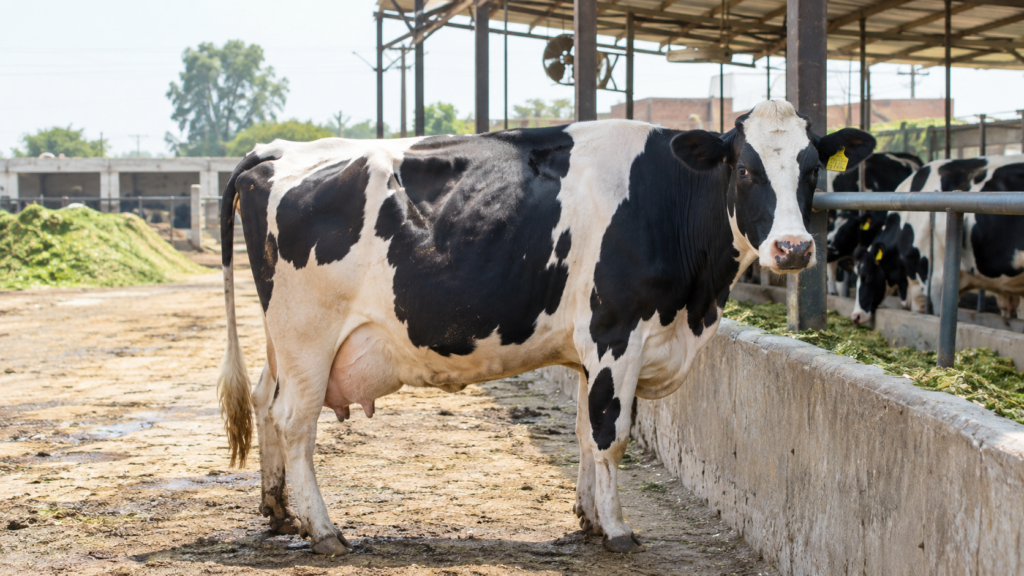
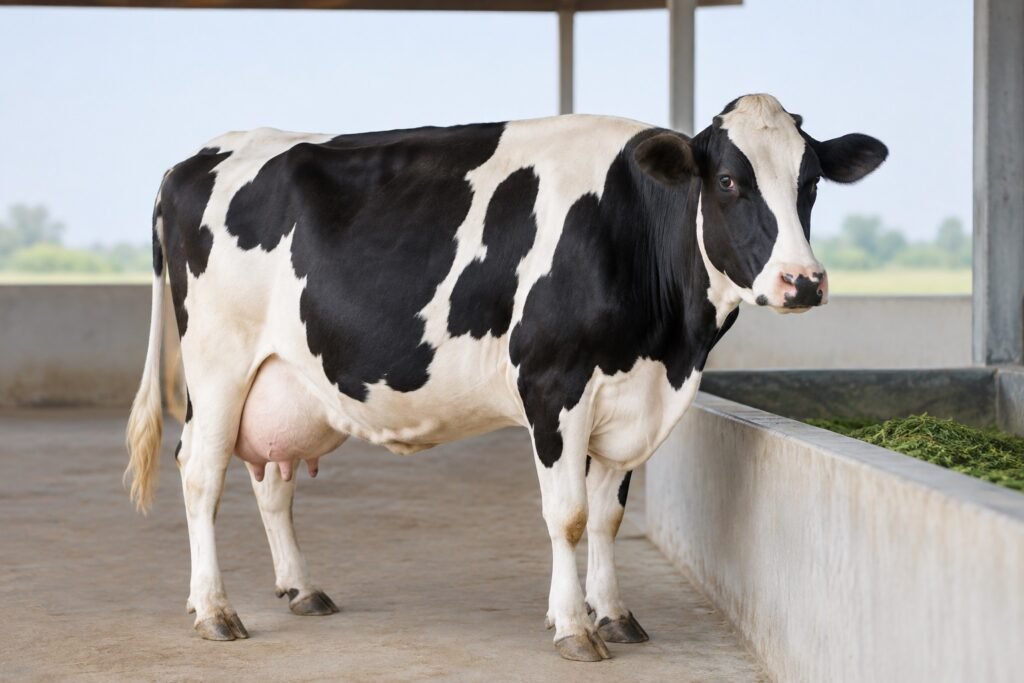
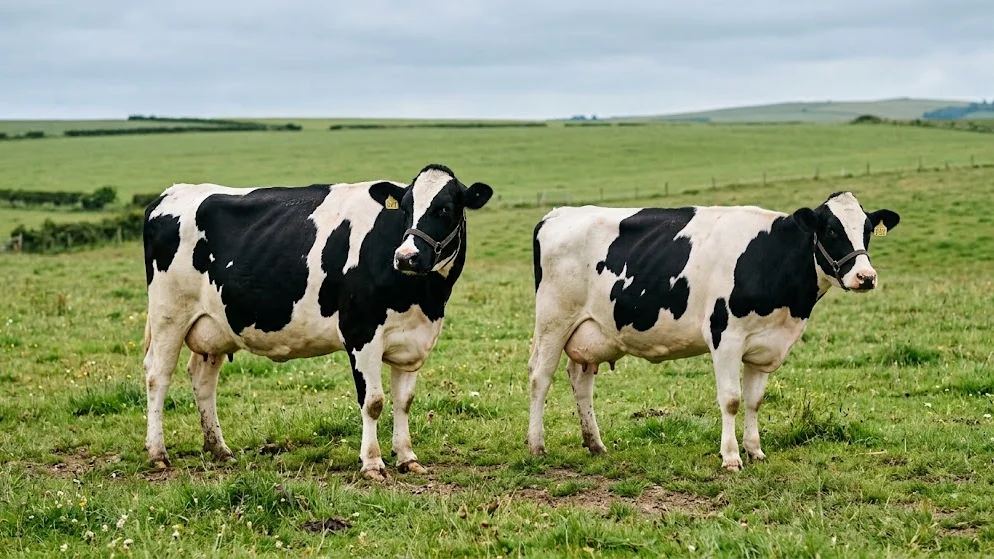
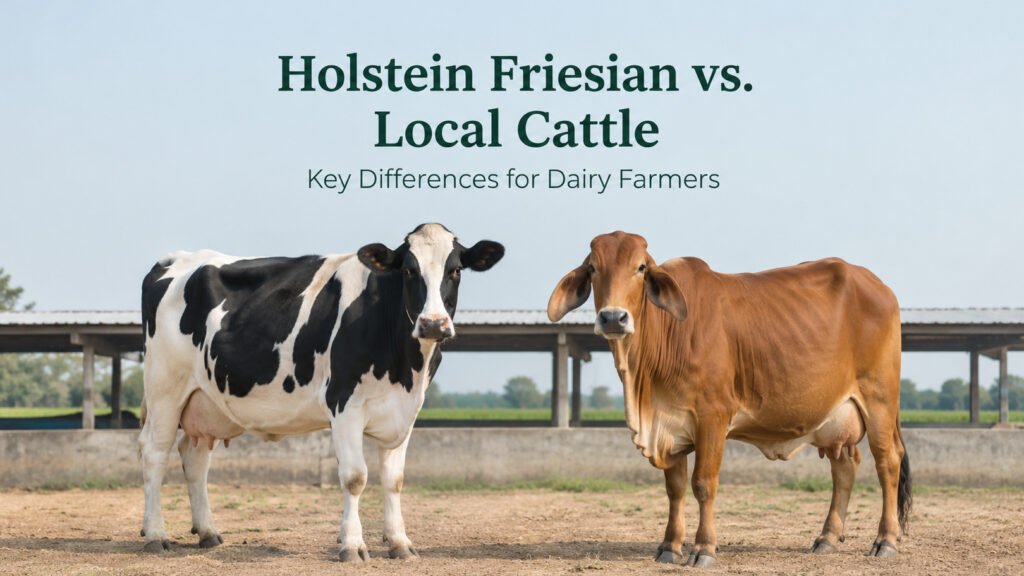
Anyone deciding what to milk in Punjab eventually runs into the same comparison: Holstein Friesian (HF), the black-and-white breed associated with high milk volumes worldwide, versus local zebu breeds such as Sahiwal, Red Sindhi, and Cholistani.
The two are not simply “better” or “worse” versions of the same animal — they are genetically different types of cattle, shaped by very different environments and breeding goals.
Understanding those differences helps explain why HF cows need a different level of management than local cattle, and why local breeds still hold their ground on many Pakistani farms despite lower milk output.
Genetic Background: Two Different Types of Cattle
Holstein Friesian belongs to Bos taurus, the taurine cattle lineage developed in the cooler, humid lowlands of the Netherlands and northern Germany.
Selection over more than a century focused almost entirely on one trait: milk volume. Local breeds like Sahiwal, Red Sindhi, and Cholistani belong to Bos indicus, the zebu lineage native to the Indian subcontinent, shaped by centuries of exposure to heat, poor-quality forage, and tick-borne disease pressure.
This single genetic difference — taurine versus indicine — explains most of what follows: heat tolerance, feed efficiency on rough forage, disease resistance, and milk yield potential.
Milk Yield: The Main Reason Farmers Choose HF
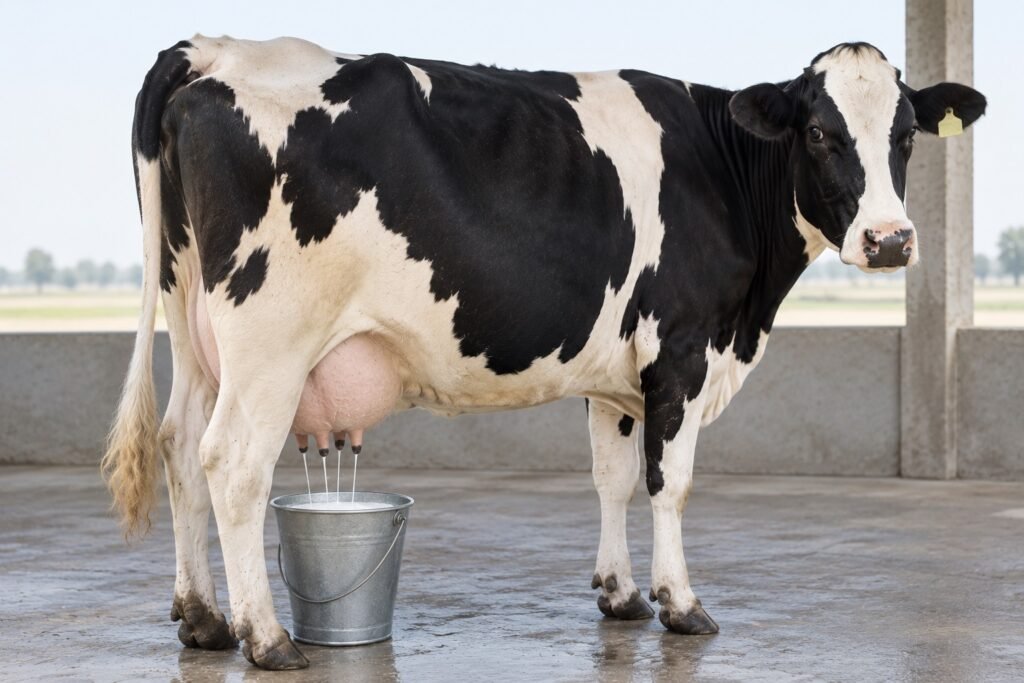
This is the most obvious difference. Under good management — proper feeding, clean water, comfortable housing, and heat mitigation — a Holstein Friesian cow can produce considerably more milk per lactation than any local breed, often in the range of 5,000–8,000+ liters over a 300-day lactation on well-run commercial farms, compared to roughly 1,500–3,000 liters from a good Sahiwal cow under similar conditions.
Sahiwal is generally recognized as one of the best dairying zebu breeds precisely because it narrows this gap more than most other local breeds.
It’s important to be realistic about ranges rather than quoting a single number: actual HF yield in Pakistan varies enormously depending on genetics/import source, feeding program, heat stress management, parity (number of lactations), and overall herd health.
A poorly managed HF cow in a hot, poorly ventilated shed with inadequate feed will underperform badly — sometimes not much better than a local cow — because the breed’s high genetic potential only shows up when the environment supports it.
Heat Tolerance: Where Local Cattle Have the Advantage
This is arguably the most practically important difference for Punjab’s climate. Zebu cattle have physical traits that help them dissipate heat: more functional sweat glands, looser skin, a larger surface-area-to-body-mass ratio in some traits, and the characteristic hump and dewlap that aid heat loss.
Holstein Friesian, bred for a temperate European climate, has comparatively fewer sweat glands and a higher metabolic rate driven by high milk production — which itself generates internal heat.
The result is that HF cows are far more prone to heat stress once temperatures rise above roughly 25–27°C, and Punjab regularly sees summer temperatures well above 40°C with high humidity in some areas.
Heat stress in HF shows up as reduced feed intake, dropped milk yield, poor conception rates, and increased respiration rate (panting).
This is why commercial HF farms in Pakistan rely on shade structures, fans, foggers/sprinkler systems, and adjusted feeding times (more feed offered during cooler hours) — measures that local cattle generally need to a much lesser degree.
Feeding Requirements: HF Needs a Higher Plane of Nutrition
Because HF cows are producing much more milk, their nutritional requirements — energy, protein, calcium, phosphorus — are proportionally higher, and they are far less forgiving of nutritional gaps than local cattle.
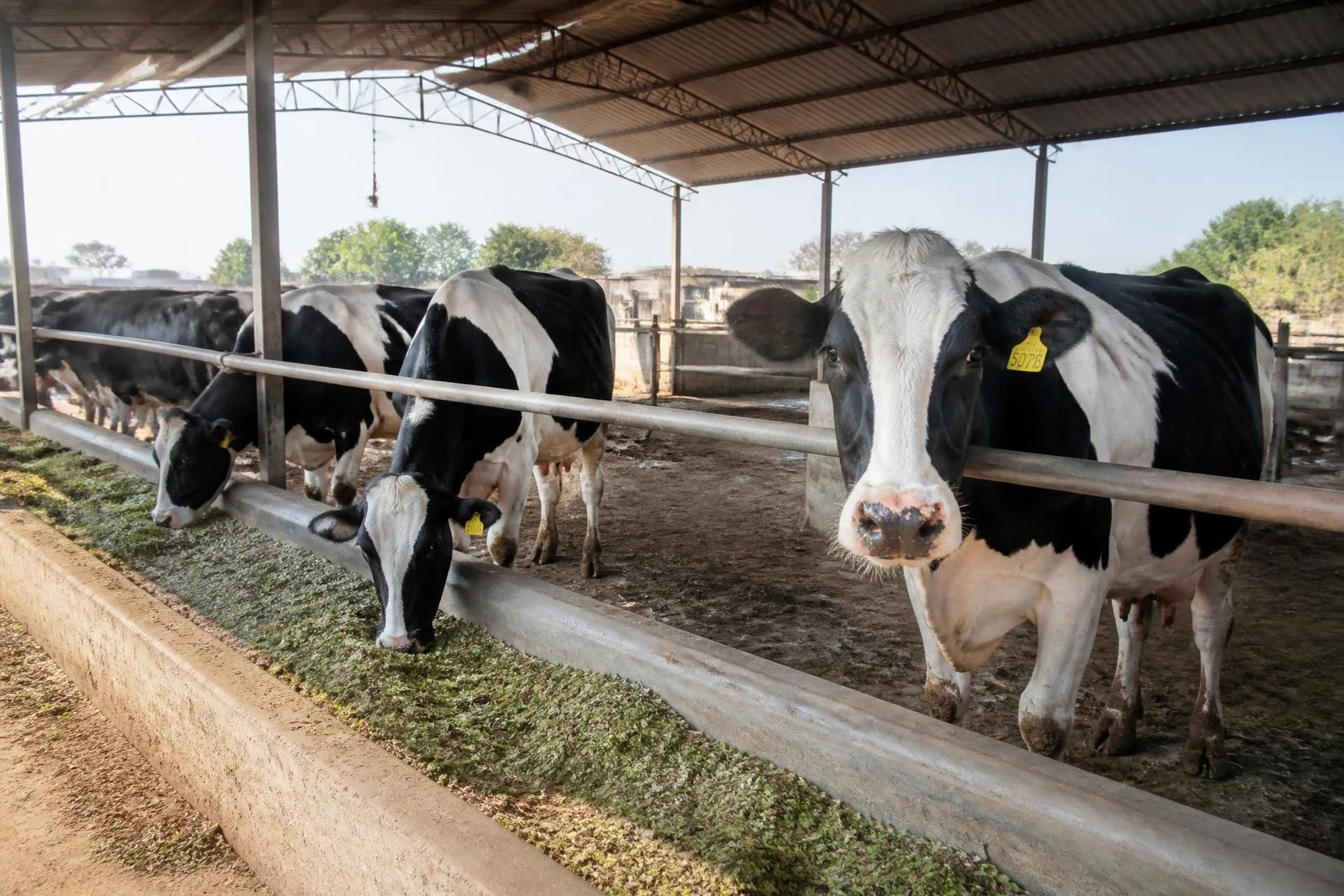
- A high-yielding HF cow typically needs a ration built around good-quality green fodder (maize/sorghum silage, berseem in winter, lucerne/alfalfa where available) combined with a properly balanced concentrate/wanda mix and a mineral mixture, often formulated as a Total Mixed Ration (TMR) on organized commercial farms so the cow gets consistent nutrition in every bite rather than sorting through loose ingredients.
- Local breeds like Sahiwal can maintain body condition and modest milk production on lower-quality roughage — wheat straw (tooda/bhoosa), grazing, and limited concentrate — because their rumen microbial population and digestive physiology are somewhat better adapted to extracting nutrients from fibrous, lower-quality feed.
This doesn’t mean local cattle don’t respond to better feeding — they do, and yield can improve meaningfully with good nutrition — but the gap between “minimum maintenance” and “productive ration” is much wider and more consequential for HF.
Underfeeding an HF cow, especially in early lactation, leads quickly to excessive body condition loss, poor fertility, and metabolic problems.
Water Requirements
Milk is roughly 87% water, so higher milk output directly increases water demand. A high-producing HF cow in hot weather can require significantly more water intake per day than a local cow of similar body weight, partly due to milk synthesis and partly due to the extra water needed for evaporative cooling (panting, sweating) under heat stress.
Reliable, clean, and cool drinking water access — not just availability, but frequency of access throughout the day — matters more for HF herds than is often appreciated.
Housing and Shelter Needs
Local cattle are generally more tolerant of open housing, direct sun, and basic shelter. HF cows, given their heat sensitivity and the correlation between comfort and milk yield, benefit much more from:
- Adequate shade with good roof insulation or height for air movement
- Fans and, in peak summer, foggers/misters over feeding and resting areas
- Sufficient space per animal to reduce heat load from crowding
- Clean, dry standing/lying areas to reduce udder health risks
None of this is optional cosmetic investment for HF — it directly affects feed intake, milk yield, and reproductive performance during Punjab’s hot months.
Disease and Parasite Resistance
Zebu breeds, through long natural exposure, generally show greater resistance to tick infestation and tick-borne diseases such as theileriosis and babesiosis, as well as somewhat greater general hardiness against common regional health challenges.
Holstein Friesian, lacking that evolutionary exposure, tends to be more susceptible to these conditions and often needs a more structured tick and parasite control program, along with closer monitoring for conditions like mastitis, which can be more common in high-yielding cows due to greater udder pressure and milk volume.
This doesn’t mean HF cattle are inherently “weak” — with proper vaccination schedules, parasite control, hygiene, and prompt veterinary attention when cows show signs of illness (reduced appetite, abnormal milk, fever, lameness, behavioral changes), HF herds can be managed successfully in Pakistan.
But the margin for neglect is smaller than with local breeds, and any noticeable change in a cow’s behavior or milk should prompt a veterinary check rather than a wait-and-see approach.
Milk Composition
Local breeds, particularly Sahiwal, tend to produce milk with higher fat content — often in the range of 4.5–5% — compared to typical Holstein Friesian milk fat around 3.5–3.7%, though this varies with individual cow genetics, stage of lactation, and diet.
For farmers selling milk on a fat-content basis, this is a relevant economic consideration: HF’s advantage lies in volume, while local breeds partly compensate through richer milk.
Reproduction and Calving
Age at first calving and calving interval depend heavily on management, but as general patterns: HF heifers, given adequate nutrition, are typically bred to calve around 24–27 months of age, reflecting faster early growth under a high plane of nutrition.
Local breeds often mature somewhat more slowly under typical smallholder feeding conditions, though with good nutrition the gap narrows.
Calving interval (time between calvings) in HF herds requires close attention to heat detection and post-calving nutrition, since high milk production and heat stress can both delay return to fertility if not managed carefully.
Management Intensity and Cost Considerations
Put simply: HF is a higher-input, higher-output animal, while local breeds are a lower-input, lower-output animal.
Choosing between them — or combining both, or using crossbreeding to blend traits — depends on what a farmer can realistically provide:
- Reliable year-round green fodder and concentrate supply
- Heat mitigation infrastructure for summer
- Consistent veterinary and reproductive management
- Capital for a higher initial investment and ongoing input costs
Where these can be provided consistently, HF’s yield advantage generally justifies the investment.
Where feed supply is inconsistent, summers are extreme without cooling infrastructure, or veterinary access is limited, local breeds — or crossbred animals combining HF milk potential with zebu hardiness — often prove more resilient and economically sustainable.
The Practical Takeaway
Neither breed is universally “the right choice.” Holstein Friesian offers substantially higher milk yield but demands a correspondingly higher level of feeding precision, heat management, water access, and veterinary attention.
Local breeds like Sahiwal offer lower yield but greater tolerance for heat, rough forage, and less intensive management, along with generally higher milk fat content.
The right decision depends on a farm’s specific climate control capacity, feed availability, and management resources — not on which breed has the more impressive milk figures on paper.