زبان یہاں تبدیل کریں ↓
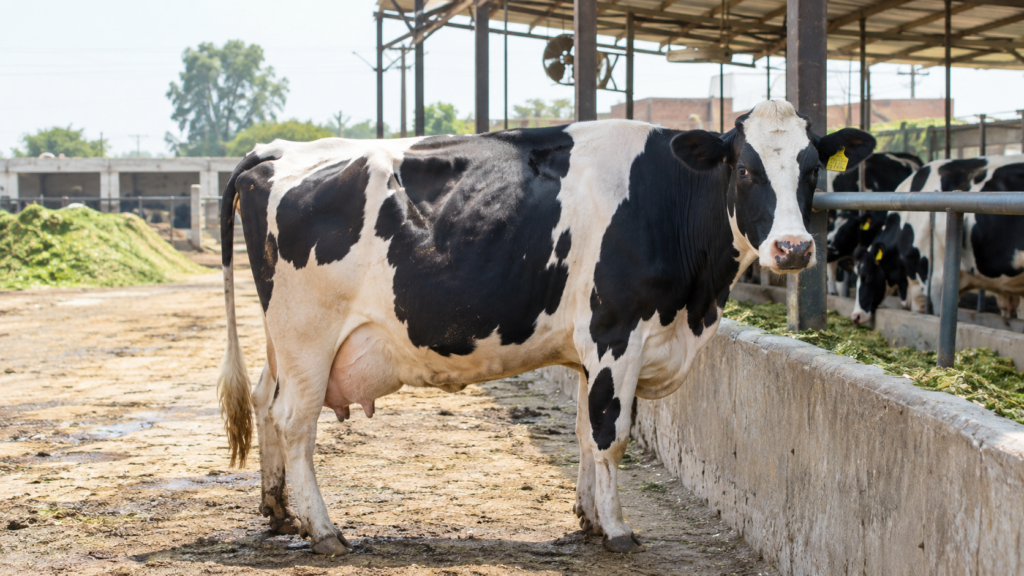
Holstein Friesian is the most widely used dairy breed in commercial milk production worldwide, and increasingly in Pakistan’s organized dairy sector as well.
Its popularity is not accidental — the breed has specific genetic, physiological, and management characteristics that make it well suited to farms that are run as a business rather than for household milk needs.
At the same time, those same characteristics come with requirements that a farm must be prepared to meet. Understanding both sides gives a realistic picture of why Holstein Friesian is chosen, and what it takes to get results from it.
Genetic Potential for High Milk Yield
Holstein Friesian was developed in the Netherlands over centuries of selective breeding, with milk volume as the primary trait selected for.
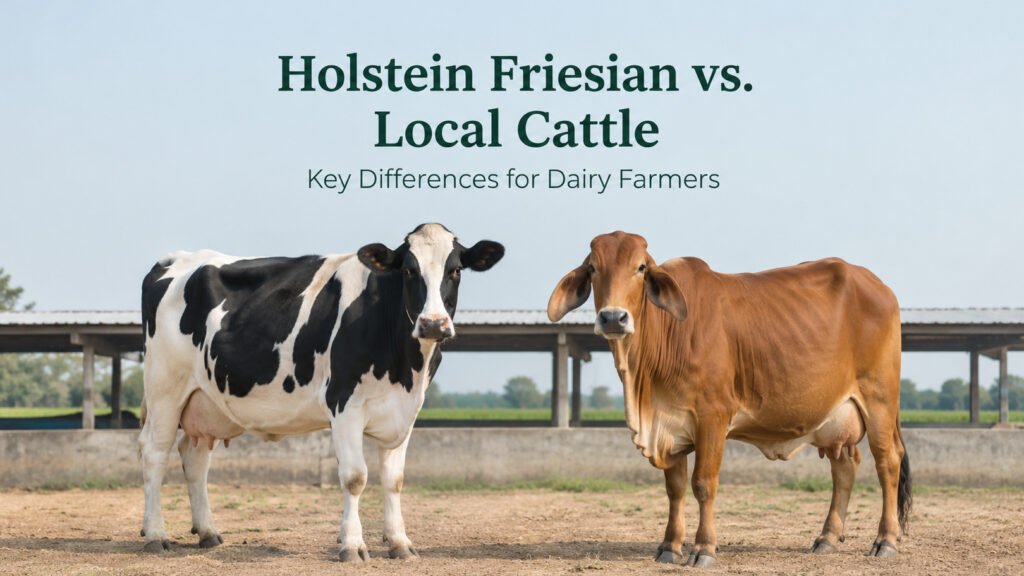
This long selection history is the main reason the breed produces significantly more milk per lactation than indigenous zebu breeds such as Sahiwal or Cholistani, which were bred mainly for heat tolerance, disease resistance, and draught ability rather than maximum milk output.
Under good commercial management, a mature Holstein cow can produce considerably more milk over a 305-day lactation than a local breed cow.
The exact figure varies a great deal depending on genetics of the individual animal, feeding standard, herd health, climate control, and the stage of lactation — a cow in early-to-mid lactation naturally yields more per day than one nearing the end of her lactation cycle.
This is why any milk yield number quoted for Holstein Friesian should always be read as “achievable under proper management,” not as a fixed guarantee.
Body Structure Suited to Milk Production
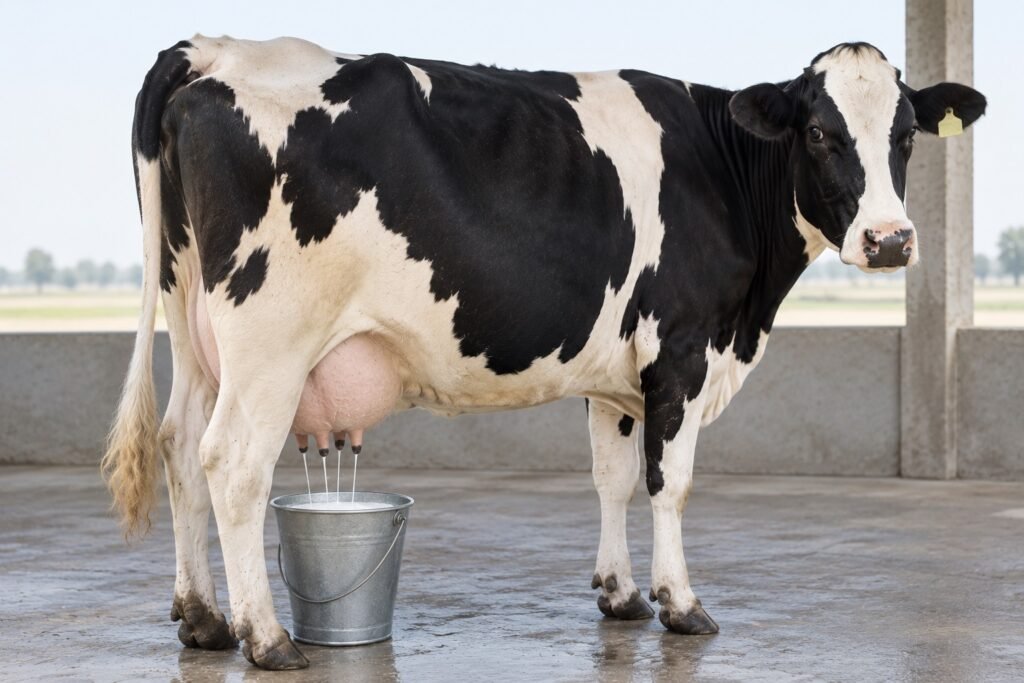
Holstein Friesians have a large body frame, a strong digestive capacity relative to body size, and a well-developed mammary system (udder) with good milk-vein development.
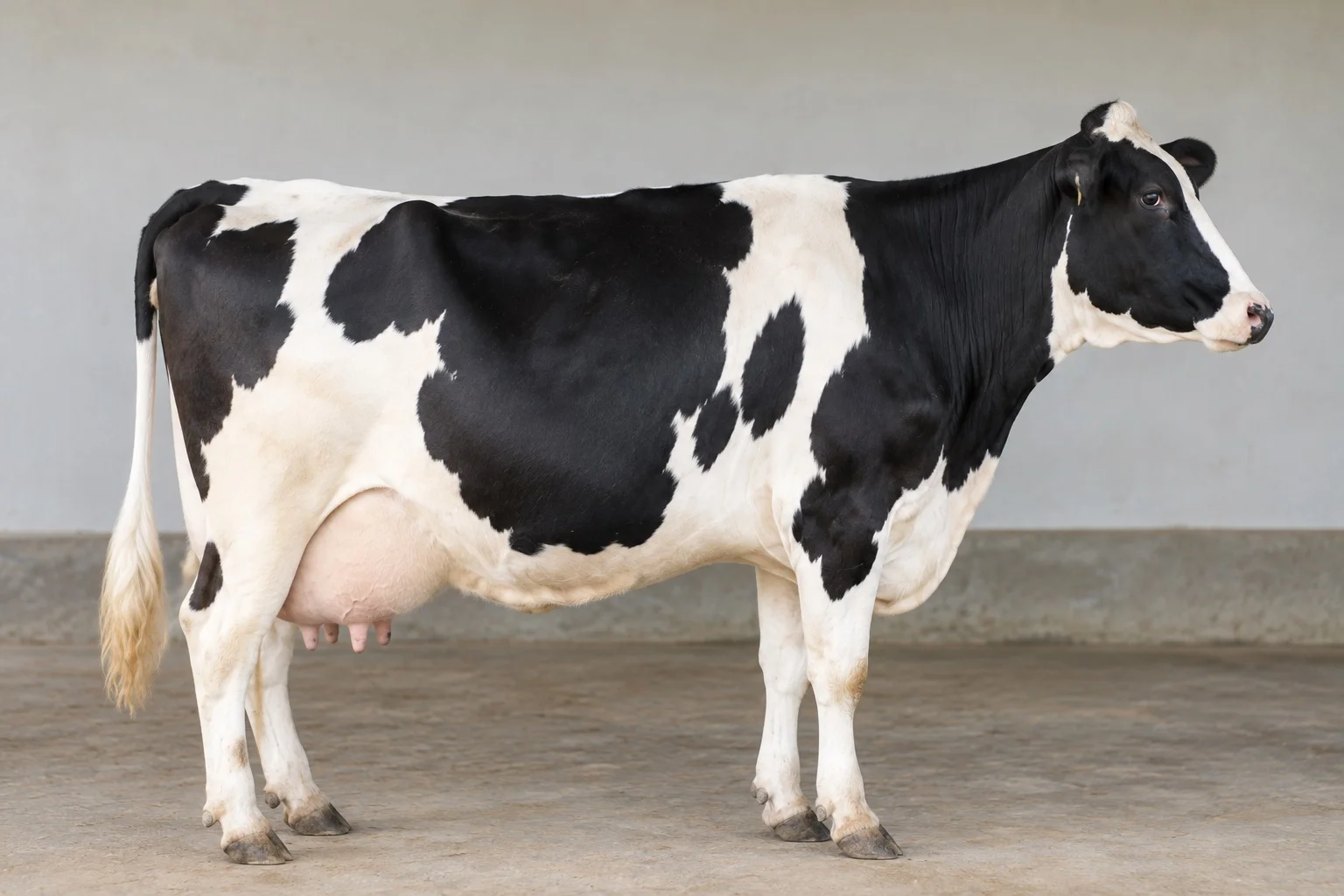
These are not cosmetic traits — a larger rumen allows the cow to process more feed volume per day, which is necessary to fuel high milk output, and a well-attached, well-supported udder is important for sustained production over multiple lactations without excessive strain or injury.
Feeding Requirements: Why Nutrition Has to Match Genetic Potential
This is where Holstein Friesian differs most sharply from local breeds in terms of what the farm must provide.
A cow with high genetic potential for milk will not express that potential on poor-quality roughage alone. Because milk synthesis is energy- and protein-intensive, commercial Holstein herds are typically fed a combination of:
- Green fodder such as berseem in winter and maize or sorghum-based green fodder in summer, for palatability and basic nutrients.
- Maize silage, which is widely used because it can be stored and fed year-round, giving a more consistent energy supply than seasonal green fodder alone.
- Alfalfa/lucerne, valued for its relatively high protein content compared to many other fodders.
- Wheat straw as a fibre source, usually treated (e.g., urea-treated) or fed alongside better-quality forage rather than as the sole roughage, since straw alone is too low in energy and protein for a high-yielding cow.
- Concentrate feed (wanda), formulated with grains, oilseed cake, and other energy/protein sources, fed according to the cow’s milk yield and stage of lactation — a fresh, high-producing cow needs more concentrate than a cow in late lactation.
- Mineral mixture, added because high milk output removes large amounts of calcium, phosphorus, and trace minerals from the cow’s body daily; without supplementation, deficiencies show up as reduced fertility, weak bones, or poor milk quality over time.
Many organized commercial farms move toward a Total Mixed Ration (TMR) system, where all these components are combined into one uniform mix.
The reason is consistency: it prevents cows from selectively eating only the tastier parts of the ration and leaving the rest, which can otherwise cause uneven nutrient intake across the herd.
The underlying point is simple — Holstein Friesian’s high yield is a genetic ceiling, not a guaranteed outcome.
Underfeeding, or feeding low-quality roughage without adequate concentrate and mineral supplementation, results in a cow that neither reaches her yield potential nor maintains good body condition.
Heat Stress: A Real Limitation in Punjab’s Climate
Holstein Friesian originated in a temperate European climate and has comparatively low tolerance for heat and humidity compared to zebu breeds.
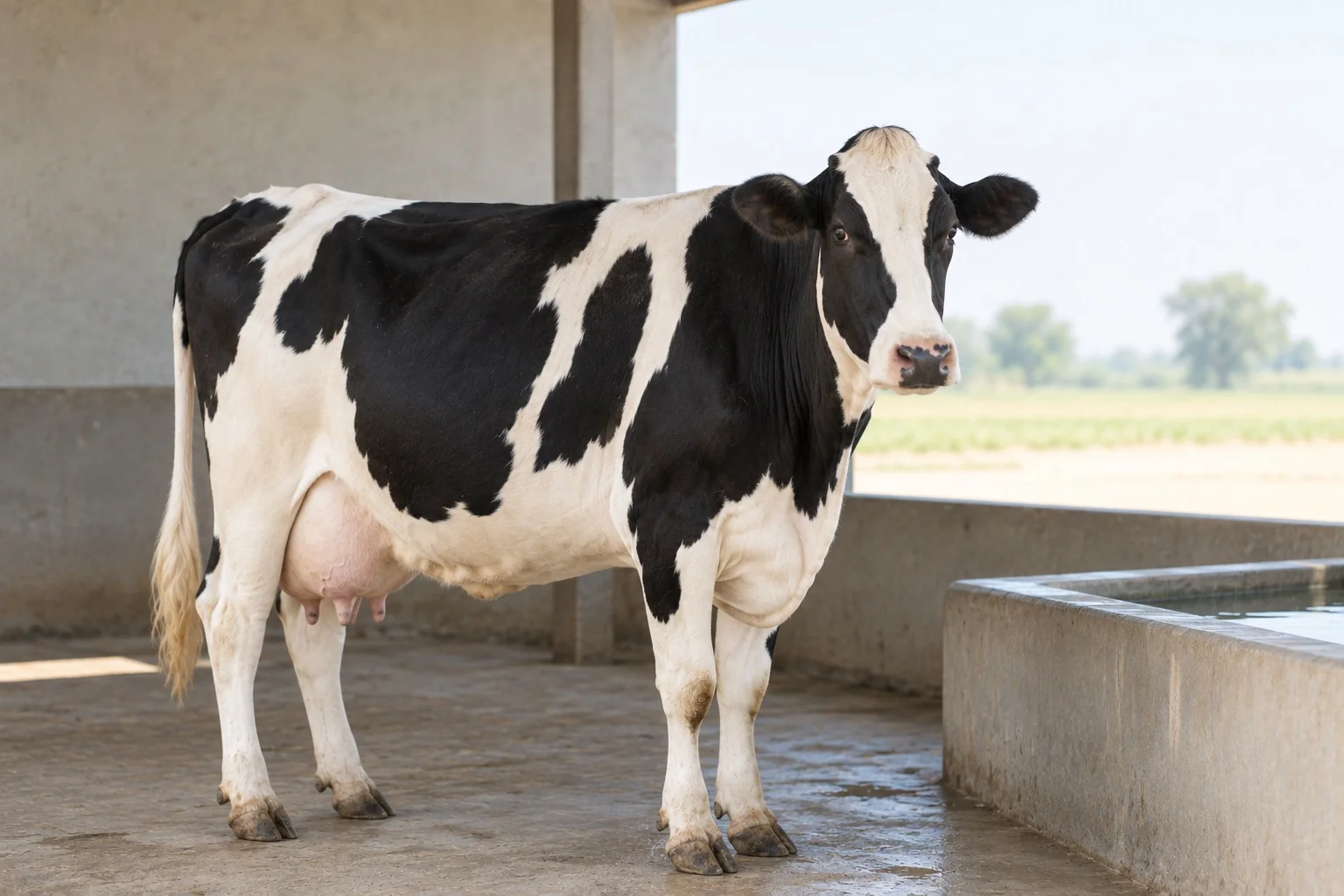
In Punjab, where summer temperatures commonly exceed 40°C, heat stress is one of the most significant practical challenges in Holstein management, and it directly affects milk yield, fertility, and general health if not addressed.
Signs of heat stress include increased respiration rate, reduced feed intake, more time spent standing than lying, and a drop in milk yield that often does not fully recover until the following lactation. Because of this, commercial Holstein operations in Pakistan generally need:
- Adequate shade over resting and feeding areas.
- Fans and, where feasible, water misting/sprinkler systems in housing sheds, particularly during peak summer months.
- Constant access to clean, cool drinking water — water intake rises sharply in heat, and restricted access compounds heat stress.
- Adjustments to feeding times, such as offering a larger share of the concentrate or TMR during cooler parts of the day (early morning, late evening) when the cow is more likely to eat well.
This is not an optional comfort measure; it is a core part of why some farms cross Holstein with Sahiwal (producing Friesian-Sahiwal or similar crossbred cattle) to combine higher milk yield with better heat and disease tolerance, accepting a somewhat lower yield ceiling than pure Holstein in exchange for easier management under local conditions.
Water and Housing Needs
Because of both their body size and high milk output, Holstein Friesians need more drinking water per day than local breeds — water is the single largest component of milk by volume, so inadequate water intake shows up quickly as reduced milk yield.
Housing should allow enough space per animal to lie down comfortably, since resting time is linked to rumination efficiency and milk synthesis, along with proper flooring and drainage to reduce the risk of lameness and udder infection from a dirty, wet environment.
Health Considerations Specific to High-Yielding Cows
Higher milk production comes with a higher physiological demand on the cow’s body, which makes certain health issues more relevant in Holstein herds than in low-yielding local cattle:
- Milk fever (hypocalcemia) can occur around calving time, when calcium demand for colostrum and milk production rises sharply. Prevention is generally managed through correct mineral and dietary management in the transition period before and after calving; any cow showing weakness, cold ears, or an inability to stand around calving should be seen by a veterinarian promptly.
- Ketosis, related to the energy demands of early lactation outpacing feed intake, is more of a concern in high-producing cows. Reduced appetite, weight loss, and a drop in milk yield in early lactation are signs that warrant veterinary attention rather than home treatment.
- Mastitis risk is influenced by udder size and shape, milking hygiene, and housing cleanliness. Commercial farms reduce this risk through consistent milking routines, clean milking equipment or hands, and dry, clean bedding — but any sign of swelling, heat, or abnormal milk (clots, blood, unusual color or smell) should prompt veterinary evaluation rather than self-treatment.
None of these conditions are unique to Holstein Friesian, but their higher production levels make good preventive management more important, since the physiological “margin for error” is smaller than in a lower-yielding animal.
Reproductive Management
Most commercial Holstein herds rely on artificial insemination (AI) rather than natural service, primarily because it gives access to proven high-merit bull genetics without the cost and management burden of keeping a breeding bull, and it allows more controlled breeding programs.
Maintaining a reasonable calving interval (the time between successive calvings) matters commercially because milk yield is tied to the lactation cycle — cows that calve at appropriate intervals sustain more consistent milk production across the herd and avoid unnecessarily long dry periods that reduce lifetime productivity.
Is Holstein Friesian Right for Every Farm?
Holstein Friesian is best suited to farms that can consistently provide the level of feeding, water, housing, and heat mitigation described above, along with reasonably regular veterinary access and record-keeping to track individual cow performance, feeding, and health events.
On a smallholder setup with limited fodder availability, no summer cooling arrangement, and irregular concentrate feeding, a pure Holstein cow is unlikely to perform close to her genetic potential and may develop more health problems than a locally adapted or crossbred animal would under the same conditions.
For farms that can meet these requirements, Holstein Friesian’s combination of high genetic milk potential, reasonably good feed-to-milk conversion, and compatibility with structured commercial systems (AI breeding, TMR feeding, defined milking routines) is what makes it the standard choice for large-scale, business-oriented dairy operations, both internationally and increasingly within Pakistan’s more developed dairy farms.