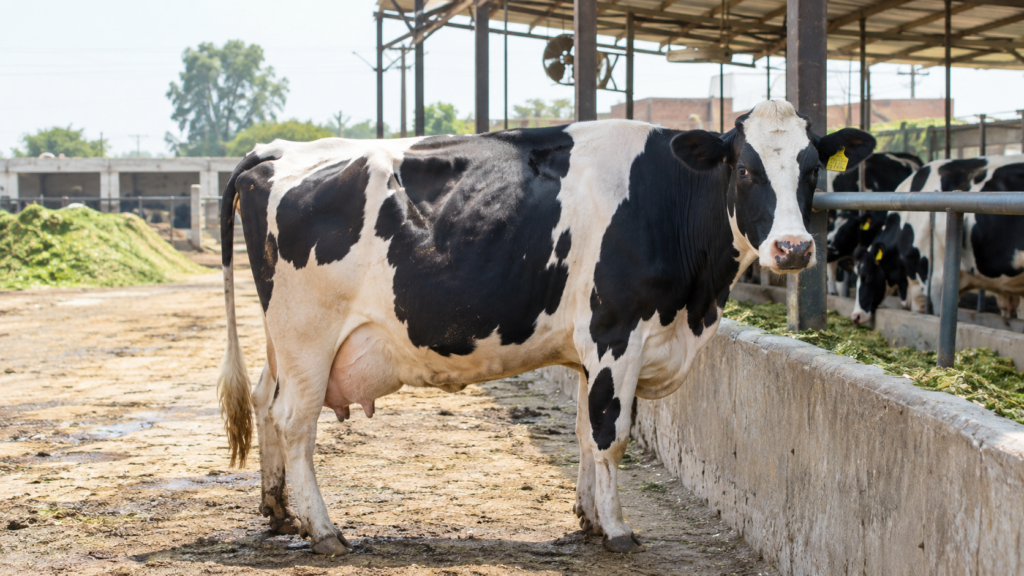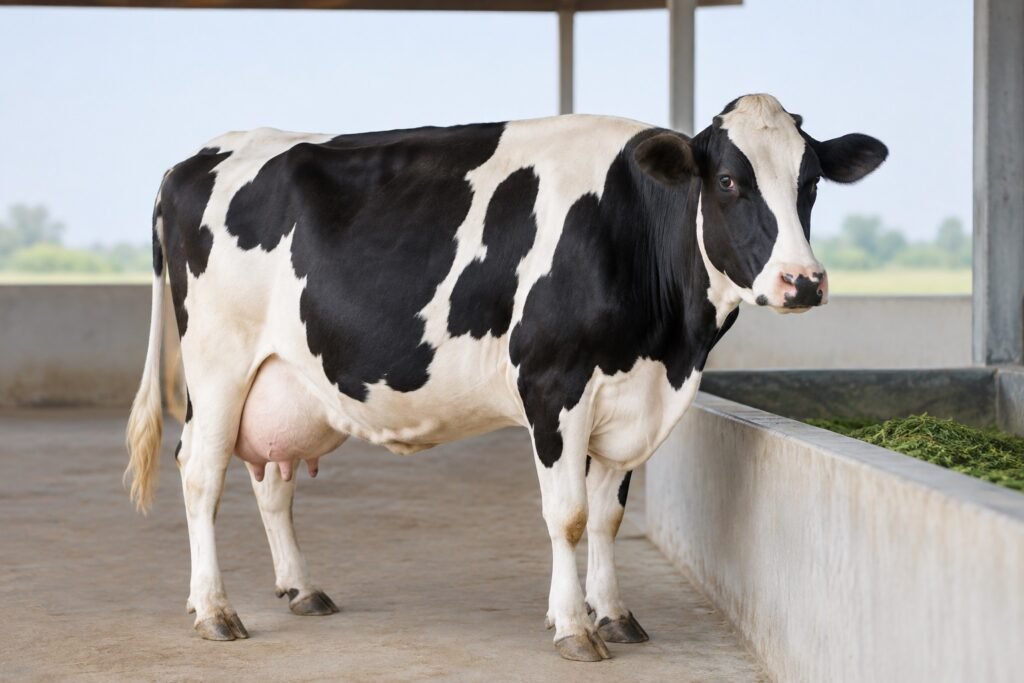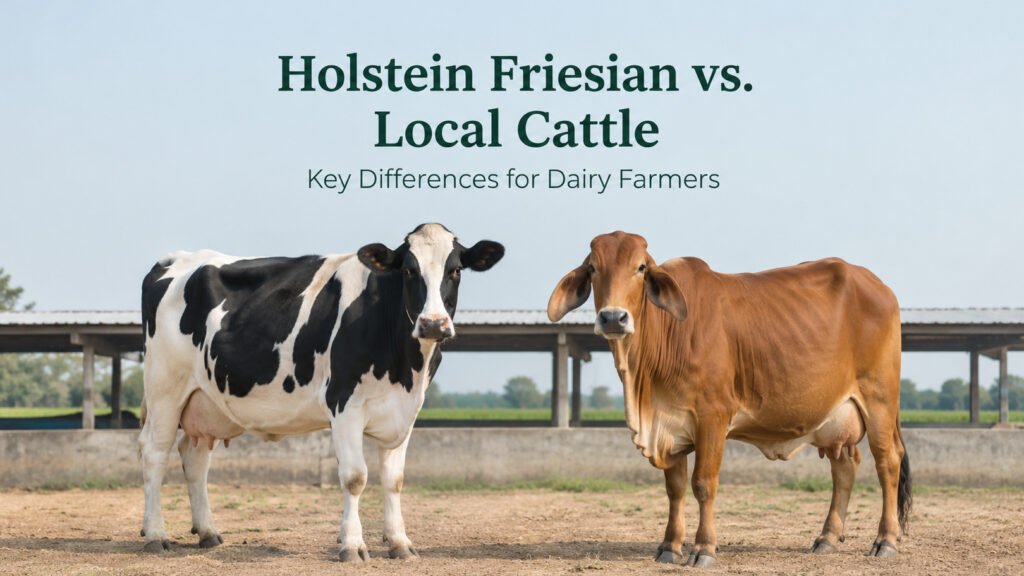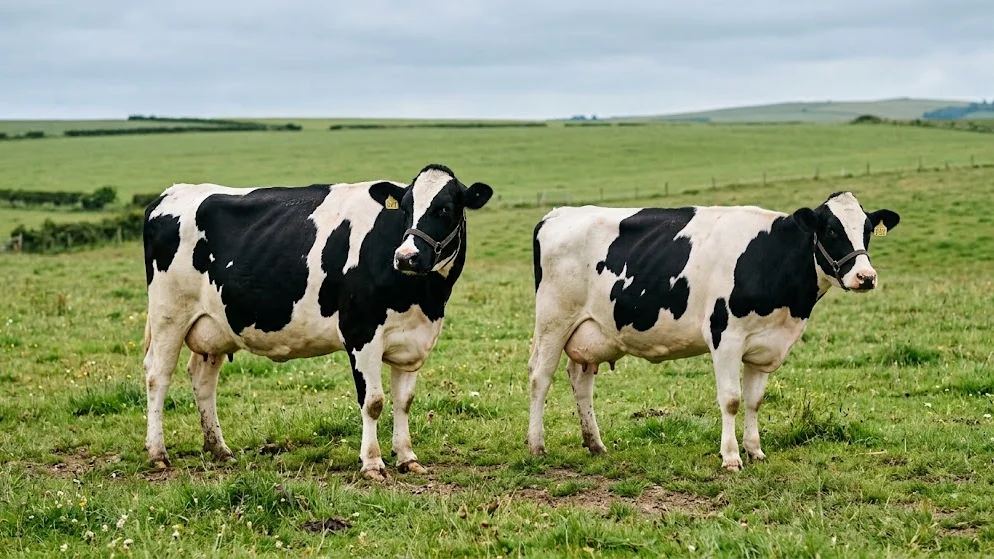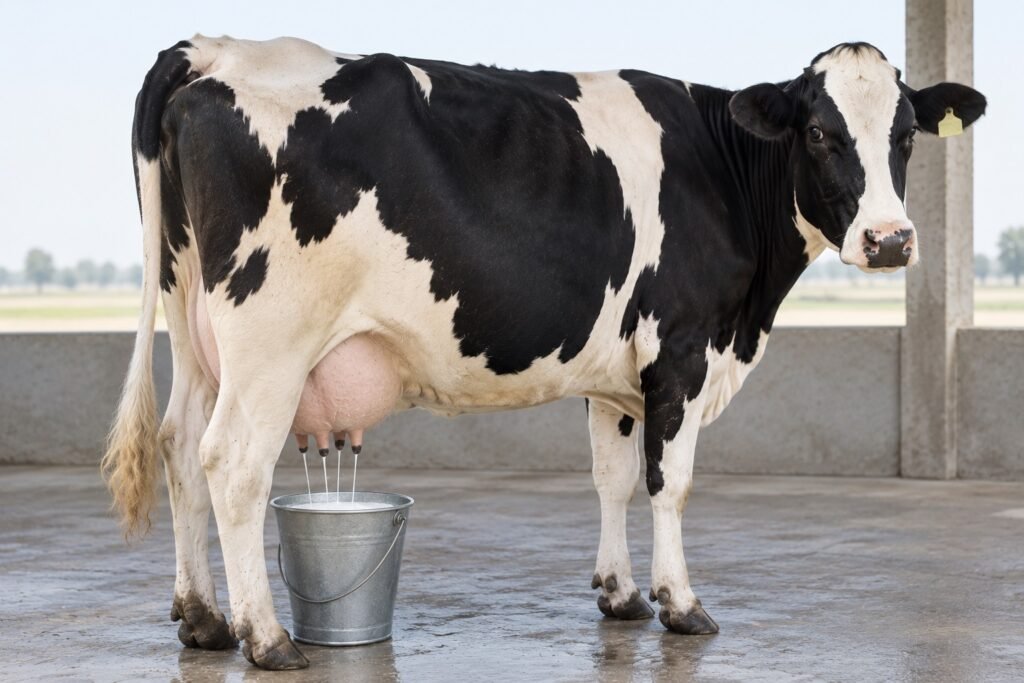
Holstein Friesian is the most widely used dairy breed in the world, and for good reason — no other breed converts feed into milk as efficiently under proper management.
But “how much milk does a Holstein Friesian give” doesn’t have one single answer. The real answer depends on genetics, lactation stage, nutrition, climate, and how the animal is managed on a day-to-day basis.
What follows is a realistic picture of Holstein Friesian milk production, including what’s achievable, what’s typical, and why the numbers vary so much.
The Short Answer
Under excellent management — balanced total mixed ration (TMR), climate-controlled housing, strong genetics, and disease-free udders — elite Holstein herds abroad can average 30–35 litres per day across a 305-day lactation, with individual cows peaking at 45–50+ litres per day in early lactation.
On well-run commercial Holstein farms in Pakistan, where cows are fed a mix of green fodder, silage, and concentrate but also face summer heat stress, a realistic average is closer to 20–30 litres per day, with total lactation yield often falling in the range of 5,500–7,500 litres over 305 days.
Farms with weaker ration balancing, heat management, or health control commonly see 12–18 litres per day and lower lactation totals.
None of these numbers are fixed. A single cow’s output changes across her lactation, across parities, and across seasons — which is why farmers should think in terms of ranges and trends rather than one “correct” figure.
Understanding the Lactation Curve
A Holstein Friesian cow doesn’t give the same amount of milk every day of her lactation. After calving, daily yield rises steadily and usually peaks around 6–10 weeks postpartum.
From there, it gradually declines — a well-managed cow with good “persistency” declines slowly, while a poorly fed or heat-stressed cow drops off sharply.
This is why peak yield and average yield are two different things, and why judging a cow’s productivity from a single day’s milking (especially near peak) can be misleading.
Total lactation yield is usually measured over a standard 305-day period, since most cows are dried off roughly 60 days before their next calving to let the udder rest and the cow rebuild body condition for the next lactation.
What Determines How Much a Holstein Friesian Cow Produces
Genetics and parity. A cow’s genetic merit for milk sets her ceiling, but she rarely reaches it in her first lactation. First-calf heifers typically give 70–75% of what the same cow will produce once mature, with output usually peaking around the third to fifth lactation.
This is a normal part of the animal’s development, not a management failure.
Nutrition. Milk synthesis is energy- and protein-intensive. A cow that doesn’t consume enough digestible energy and quality protein simply cannot sustain high yield, no matter how good her pedigree is. This is covered in more detail below.
Heat stress. Holstein Friesian was developed in the cool, temperate climates of the Netherlands and northern Germany. Its comfort zone is roughly 5–25°C.
Once temperature and humidity rise above that — as they do across Punjab from April through September — cows eat less, drink more, and divert energy toward cooling themselves rather than milk production.
Drops of 10–30% in daily yield during peak summer are common on farms without adequate heat abatement.
Health, particularly the udder. Subclinical or clinical mastitis reduces both milk yield and milk quality, sometimes permanently damaging the affected quarter.
Lameness, metabolic disorders around calving (such as milk fever or ketosis), and poor body condition all suppress production as well.
Water intake. A high-yielding Holstein Friesian cow can require 100–150 litres of clean water per day, more in summer, because milk itself is roughly 87% water.
Restricted or poor-quality water access is one of the most underrated causes of disappointing yields on Pakistani farms.
Milking routine and comfort. Consistent milking times, calm handling, and comfortable resting space (clean, dry standing/lying area, adequate shade) support let-down and sustained production. Stress and inconsistent milking intervals suppress yield.
Calving interval. An ideal calving interval is around 12–13 months. When it stretches longer due to delayed conception, the cow spends more days in late lactation (naturally lower yield) relative to peak lactation, reducing her lifetime milk output even if any single lactation looks normal.
Feeding a High-Producing Holstein Friesian in Punjab
Because nutrition has the single biggest controllable effect on yield, it deserves specific attention rather than a vague reference to “good feed.”
A lactating Holstein Friesian needs a ration that supplies enough energy, protein, fibre, and minerals in the right proportions — not simply a large quantity of feed. In Punjab, this typically means combining:
- Berseem during the rabi season (roughly November to April) — a high-quality, palatable green fodder that’s a mainstay for lactating cows in this window.
- Maize or sorghum silage, particularly useful for bridging the gap when green fodder becomes scarce in the hot months, since it preserves nutritional value and can be stored.
- Lucerne/alfalfa, valued for its higher protein content compared to most other fodders, useful for supporting milk protein and overall production.
- Wheat straw (bhoosa) as a fibre source, which is cheap and widely available but low in energy and protein — it needs to be balanced with concentrate and green fodder rather than fed as the main component of a high-yielding cow’s diet.
- Concentrate/wanda, typically a mix of ingredients such as cottonseed cake, canola meal, maize, wheat bran, and similar components, formulated to fill the energy and protein gap that forages alone can’t cover, especially in early and peak lactation.
- Mineral mixture, supplying calcium, phosphorus, and trace minerals that forages and concentrates often don’t provide in adequate amounts — deficiencies here are linked to reduced fertility and lower yield even when energy intake looks adequate.
Where feasible, feeding these as a properly formulated total mixed ration (TMR) — rather than offering fodder and concentrate separately — helps because it prevents cows from sorting out the tastier concentrate and leaving roughage behind, which keeps rumen function stable and supports more consistent daily yield.
Managing Heat Stress During Punjab Summers
Given how sensitive Holstein Friesian is to heat compared to zebu-influenced breeds, heat abatement is not optional for anyone serious about milk yield in Pakistan.
Practical measures include adequate shade over standing and feeding areas, fans and water sprinklers/misters in the shed, access to wallows or water bodies where feasible, feeding during the cooler parts of the day (early morning and evening) when cows are more willing to eat, and ensuring water troughs are always full and clean since water intake is a cow’s primary defence against heat load.
Farms that invest in these measures generally see much smaller summer drops in production than those that don’t.
When Milk Yield Drops Unexpectedly
A gradual decline through lactation is normal. A sudden or sharp drop is not, and usually signals a problem worth investigating rather than waiting out.
Watch for signs such as a hot, swollen, or painful udder or abnormal milk (common with mastitis), reduced appetite or rumination, lameness or reluctance to stand, fever, or a sudden change in behaviour.
These situations call for veterinary evaluation rather than home remedies, since the underlying cause — infection, metabolic imbalance, or injury — determines the correct treatment, and delayed or incorrect intervention can cause lasting damage to future production.
The Practical Bottom Line
There is no single correct figure for “how much milk a Holstein Friesian gives.” A realistic commercial expectation in Punjab, with reasonably good feeding and heat management, is an average daily yield in the 20–30 litre range across a lactation, translating to roughly 5,500–7,500 litres over 305 days — with the understanding that genetics, parity, season, nutrition, and health can each push that number meaningfully up or down.
Farmers evaluating a cow’s productivity are better served by tracking her trend over a full lactation, alongside her feeding, health, and comfort conditions, than by comparing a single day’s milking against a headline number.