زبان یہاں تبدیل کریں ↓
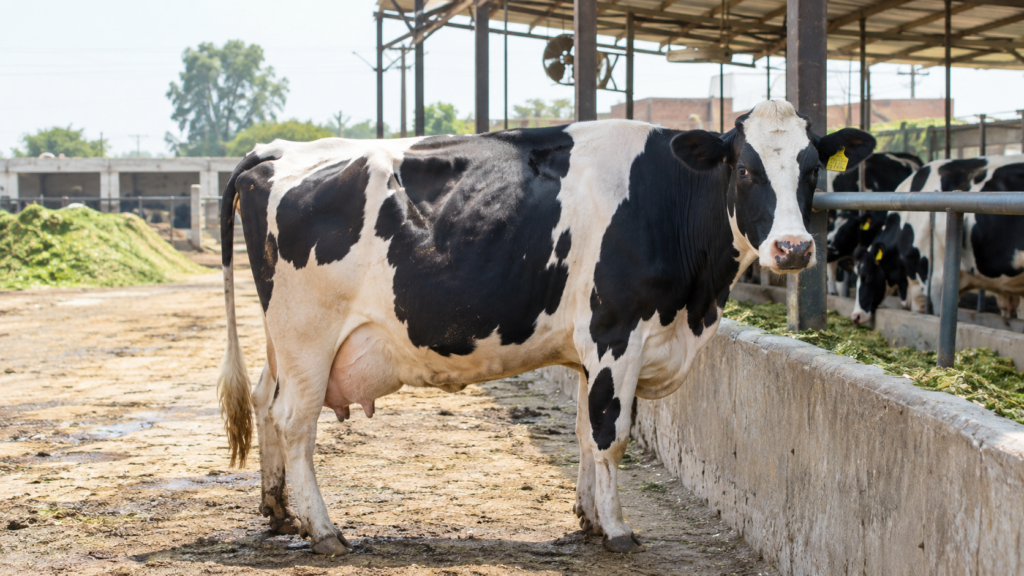
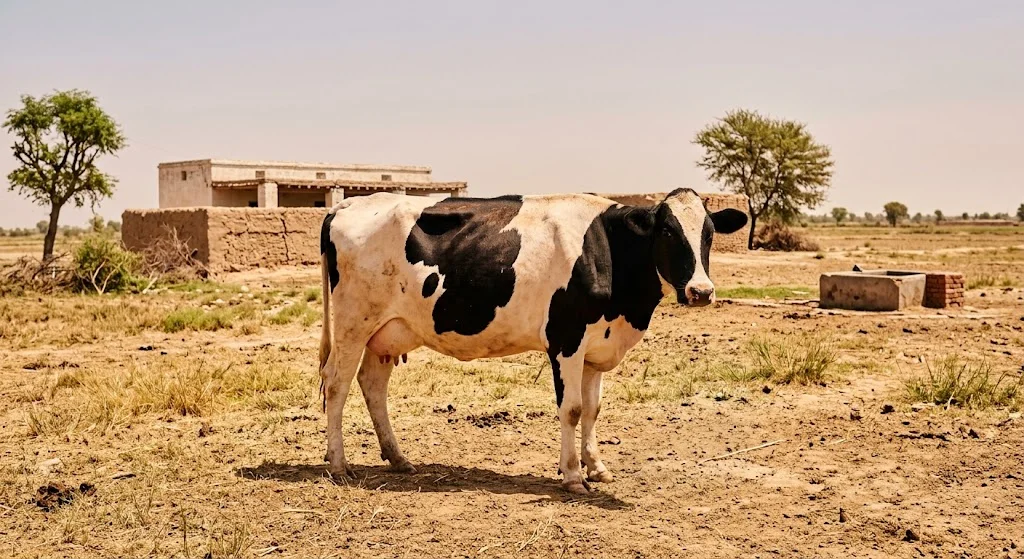
The Holstein Friesian was bred for the cool, temperate pastures of the Netherlands and northern Europe, not for the plains of Punjab.
This mismatch between where the breed comes from and where it is now farmed in large numbers is the single biggest factor shaping how Holstein Friesian (HF) dairying works in Pakistan.
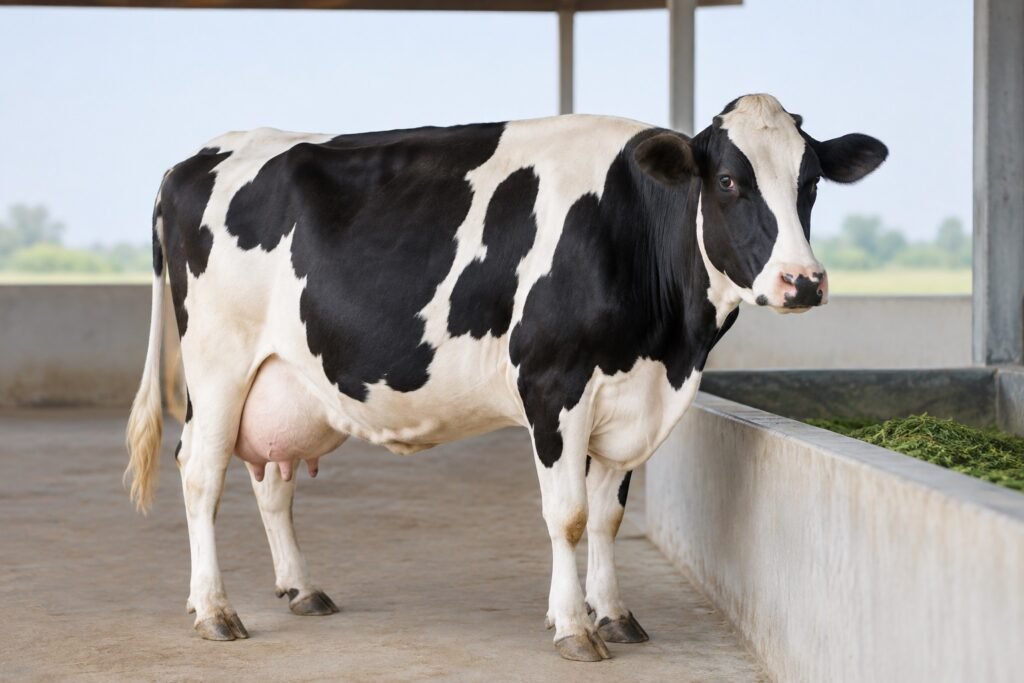
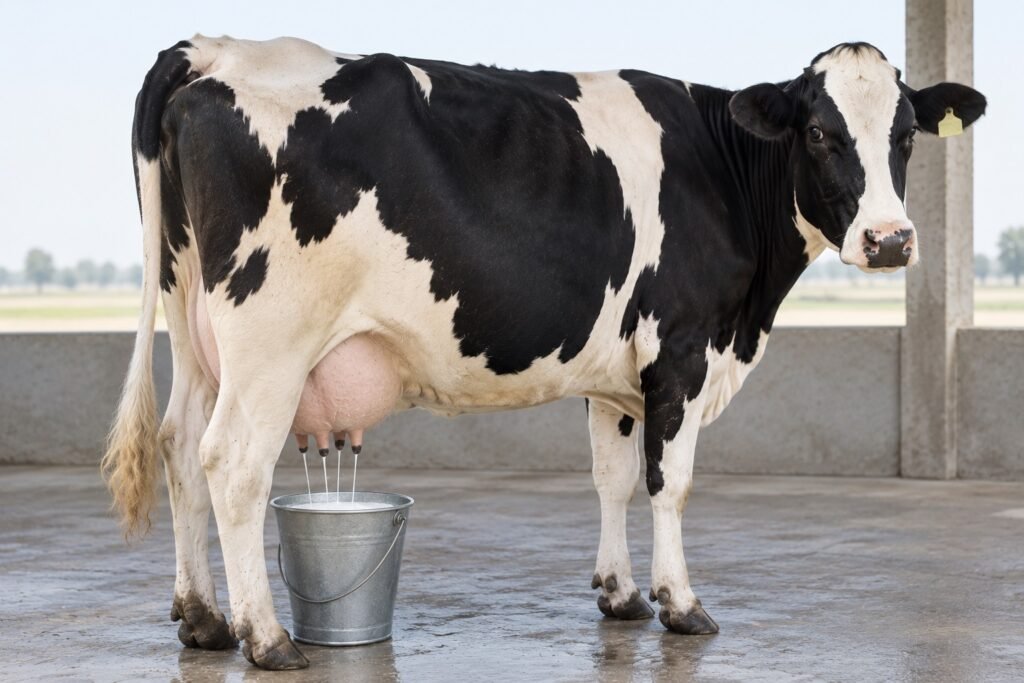
Genetically, the breed carries enormous milk-production potential — often two to three times what many indigenous cattle breeds produce — but realising that potential in Punjab’s climate depends heavily on how well heat, humidity, feed, and housing are managed.
Left unmanaged, the same cow that could produce 25–35+ litres a day in a well-run system may fall well short of that simply because of environmental stress.
Why Heat Is the Main Challenge for Holstein Friesian Cows in Pakistan
Every dairy cow has a “thermoneutral zone” — a temperature range in which it doesn’t have to spend extra energy either warming up or cooling down.
For Holstein Friesian cattle, this comfort range sits well below the daytime temperatures common across Punjab for much of the year.
Once ambient conditions move above this zone, the cow has to actively work to lose heat: increased breathing rate, sweating, and reduced movement are all the body’s ways of shedding excess heat.
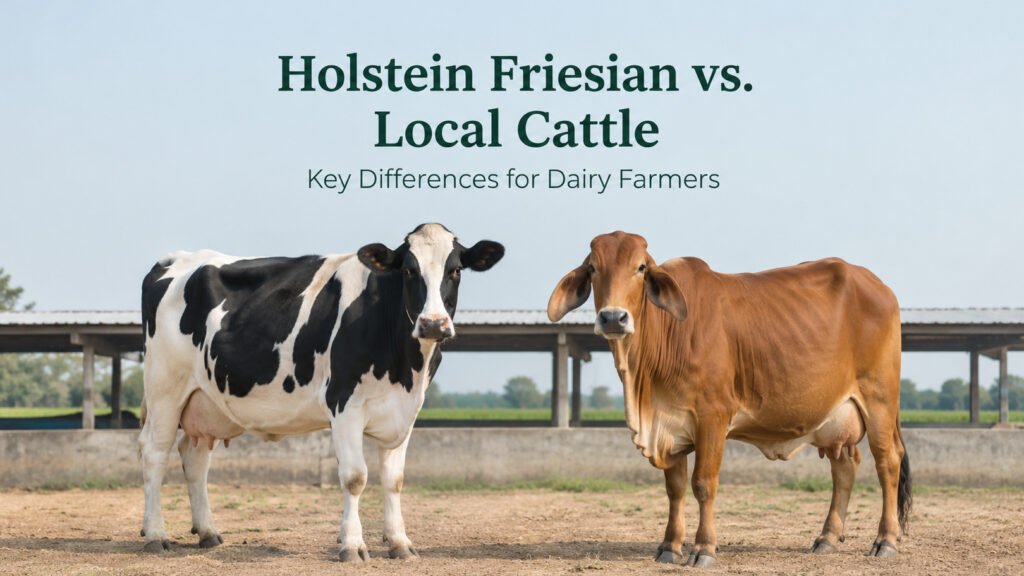
The reason HF cows struggle more than local zebu breeds like Sahiwal or crossbred cattle isn’t simply “they’re from a cold country.” It’s physiological: a high-yielding dairy cow generates a large amount of internal (metabolic) heat as a by-product of digesting feed and producing milk.
The more milk a cow produces, the more heat her body generates — so paradoxically, your best-producing cows are often the ones most vulnerable to heat stress.
Add Punjab’s combination of high temperature and, during the monsoon months, high humidity, and the cow’s ability to dissipate that heat through sweating and breathing becomes limited.
Humidity matters almost as much as temperature here, because sweat evaporates more slowly in humid air, which is why dairy scientists commonly use a combined Temperature-Humidity Index (THI) rather than temperature alone to judge heat stress risk.
Recognising Heat Stress in the Herd
Heat stress rarely appears as a single dramatic event — it usually shows up as a cluster of smaller changes:
- Reduced feed intake. Cows eat less because digestion itself generates heat (the “heat increment” of feeding), and a heat-stressed cow instinctively cuts back to avoid adding to her heat load.
- Drop in milk yield and milk fat percentage. Less feed intake means less energy available for milk synthesis, and rumen function often shifts under heat stress, which can lower fat test as well as volume.
- Panting and increased respiration rate, sometimes with drooling, especially during the hottest hours of the day.
- Seeking shade, standing more than lying down, and bunching near water points or fans.
- Reduced rumination, which affects both digestion efficiency and overall gut health.
- Silent or poorly expressed heat (estrus), lower conception rates, and higher early embryonic loss — heat stress affects reproduction as much as it affects milk.
None of these signs alone confirms heat stress, but taken together during Punjab’s hot months, they’re a reliable indicator that cooling and feeding adjustments are needed.
Winter Is Usually the Easier Season
It’s worth saying plainly: Holstein Friesian cattle generally tolerate Punjab’s winters well, and cold is rarely the limiting factor for adult cows.
In fact, milk yield often improves in cooler months simply because feed intake rises and heat stress disappears.
The main winter concern is for newborn calves, which need dry bedding and protection from cold wind and damp conditions rather than heated housing.
The real management effort in Pakistan’s HF farming is concentrated in the summer and monsoon months.
Shed Design and Housing Adjustments
Because so much of the heat challenge comes down to the cow’s immediate environment, shed design is one of the highest-value investments a Holstein farm can make:
- Roof height and ventilation matter more than wall design. A higher roof allows hot air to rise and escape rather than trapping it at animal height, and open or partially open sidewalls allow cross-ventilation.
- Roofing material affects radiant heat load directly beneath it — bare metal sheeting absorbs and re-radiates a great deal of heat, so insulated roofing, a false ceiling, or a reflective/white-painted outer surface reduces heat transfer into the shed compared to uninsulated tin sheets.
- Shade — whether from roofing, shade cloth, or trees around the housing area — reduces the cow’s direct solar heat load, which is separate from air temperature itself.
- Adequate space per animal prevents body heat from accumulating in overcrowded groups, which is especially important in loose housing systems.
Cooling Systems: Fans, Foggers, and Sprinklers
Commercial Holstein farms in Pakistan commonly rely on a combination of mechanical cooling tools, and it helps to understand what each one actually does:
- Fans move air across the cow’s body, which speeds up both convective heat loss and evaporation of sweat from the skin. They’re useful in almost any humidity condition.
- Foggers/misters cool the surrounding air by evaporating fine water droplets. This works well in dry heat but is less effective — and can even backfire — in the high-humidity conditions typical of Punjab’s monsoon season, since the air is already close to saturated and can’t absorb much more moisture.
- Direct sprinkling (“soak-and-fan”) systems, where cows are periodically wetted with larger water droplets that soak the coat down to the skin and are then dried by fan-driven airflow, tend to be more reliable across humidity levels than fogging alone, because the cooling effect comes from evaporation directly off the cow’s body rather than from the air around her.
A practical point often overlooked: excessive wetting of bedding or standing areas without adequate drainage raises the risk of mastitis and hoof problems, so cooling systems need to be paired with good drainage and dry lying areas.
Feeding Adjustments During Heat Stress
Feeding strategy has to change with the season, not just because appetite drops, but because different feeds generate different amounts of internal heat during digestion:
- Shift feeding times. Offering the bulk of feed during the cooler parts of the day — early morning, evening, or even at night — helps because peak digestive heat production then coincides with cooler ambient conditions rather than the hottest part of the day.
- Favour energy-dense, more digestible feeds over bulky low-quality roughage during peak summer. Fibrous feeds like wheat straw generate more heat during rumen fermentation than starches and fats do, so a ration leaning more on good-quality maize silage, berseem (in season), or alfalfa/lucerne hay, balanced with an appropriate concentrate (wanda) mix, reduces the total metabolic heat load compared to a straw-heavy diet — without necessarily cutting total energy intake.
- Increase feeding frequency with smaller meals rather than one or two large feedings, which smooths out the heat-of-fermentation spikes that come with large single meals.
- Water availability is critical. Water requirements rise sharply in hot weather because cows drink more to support both metabolic needs and evaporative cooling; troughs should be clean, shaded, and accessible in enough numbers to avoid competition, particularly in group housing.
- Mineral and electrolyte balance. Sweating and increased respiration during heat stress cause greater loss of minerals such as sodium and potassium; many commercial rations are adjusted seasonally with mineral mixture formulations suited to summer conditions, ideally on the advice of a nutritionist or veterinarian rather than through ad hoc dosing.
Reproductive Management in Summer
Because heat stress suppresses both the visible signs of estrus and actual fertility, many Holstein farms find that summer conception rates are noticeably lower than in cooler months.
Practical responses include watching for heat signs during the cooler early morning or late evening hours when cows are more likely to display normal behaviour, using tail chalk or activity-based heat detection aids where available, and, on some farms, adjusting breeding schedules so that late pregnancy and calving are less concentrated in the peak heat months — though in a continuous commercial dairy operation, calving obviously cannot be entirely avoided in any particular season.
Genetics: Can Breeding Help?
Some Pakistani dairy operations use crossbreeding — commonly Holstein Friesian with Sahiwal or other zebu genetics — to combine higher milk yield with better natural heat and tick tolerance.
This is a genuine trade-off: crossbred animals typically don’t match a well-managed purebred HF cow’s peak yield, but they may need less intensive environmental management to perform reliably.
Internationally, dairy geneticists have also identified traits like the “slick” hair coat gene, first documented in tropical Holstein populations in places like Puerto Rico, which is associated with improved heat dissipation; this is a research-backed example of genetic heat tolerance within the Holstein breed itself, though it is not something widely used in Pakistani herds at present.
For most commercial Pakistani farms investing in shade, ventilation, and cooling infrastructure, purebred HF remains the preferred choice specifically because it allows the farm to capture the breed’s higher genetic yield potential.
The Practical Picture
In Punjab, the Holstein Friesian’s most demanding period runs roughly from April through September, with the combination of extreme temperature in May–June and added humidity during the July–August monsoon requiring different tactics — dry-heat cooling tools like foggers work better before the monsoon, while direct soaking and strong ventilation matter more once humidity rises.
None of the individual measures — shed design, cooling equipment, feeding timing, ration adjustment, water access, or fertility management — works well in isolation; they function as a system.
A farm that gets shade and ventilation right but ignores feeding times, or invests in foggers in a high-humidity month, will still see performance losses.
Understanding why each practice exists, rather than just following it, is what allows a farm to adapt sensibly as conditions change through the year.